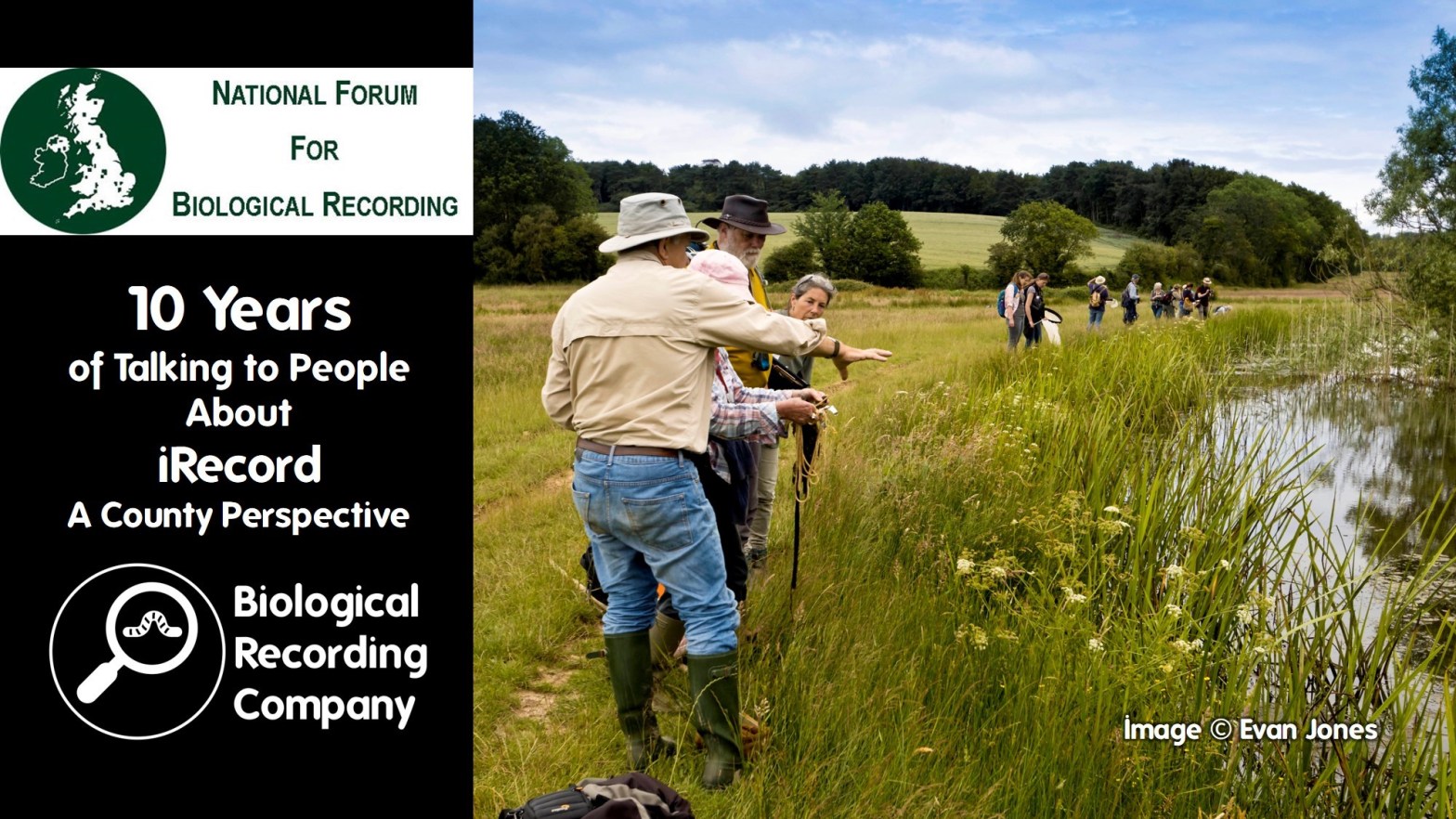
In 2013, Sussex Biodiversity Record Centre adopted iRecord as one of its main conduits for capturing Sussex sightings data. There have been triumphs! There have been tribulations. And along the way, they’ve learnt that online biological recording is, fundamentally, a community endeavour. In ten years, people have never stopped wanting to talk to Sussex Biodiversity Record Centre staff about iRecord. In this presentation, they share some of those local perspectives.
Q&A with Clare Blencowe
Clare Blencowe is the manager of Sussex Biodiversity Record Centre which sits at the foot of the South Downs about 10 miles from Brighton. She’s been involved with the local biological recording community for 15 years, initially as a volunteer coordinating recording for The Butterflies of Sussex, and joined SxBRC in 2015. Clare is a former Chair of the Association of Local Environmental Record Centres – which has given her a broader perspective on the important role that LERCs play in engaging with biological recorders locally. In her spare time, she enjoys studying fungi and uses iRecord to share results from her surveys of waxcap grasslands in the county, which have fed into an online ‘Sussex Waxcap Atlas’ and mapping of these important sites.
Why does Sussex BRC use just iRecord and not others (such as Living Record, iNaturalist and BirdTrack?
We have to make use of limited resources. We want to encourage people to record, and it works best if we have one system that we can turn people towards and that we can explain. We don’t actively discourage people from using other systems and we will try and access records from them, but iRecord is the one we use and promote. It is a great system, and it has a great verifier network and a great data sharing arrangement.
How does using iRecord affect your business model as an LERC given that iRecord data is public?
Our focus is on providing high quality data and information services. That quality comes from the value that we add in lots of different ways. iRecord is just one of the data sources that we are aggregating locally to make available, and we have bespoke systems and reporting that we use to generate reporting which includes summary information as well as detailed records that are presented in a user-friendly way. iRecord works for us but we add value by the way we incorporate it into the services we offer.
What one change or improvement would you like to see on iRecord that would benefit loal recording?
As an LERC, it would be great to have changes to the background workings of iRecord that provides additional transparency and logging around data sets that are going into and out of the Indicia data warehouse (i.e. some sort of change log). It would help us monitor data flows and would help us keep track of what we are getting via the LERC download facility. From a more general perspective, I would love there to be more funding for BRC and perhaps some more focus on the social and communication elements around iRecord.
Further info
- iRecord: https://irecord.org.uk/
- Sussex Biodiversity Records Centre: https://sxbrc.org.uk/home/
- Shoresearch: https://www.wildlifetrusts.org/get-involved/other-ways-get-involved/shoresearch
- Sussex Fungus Group: https://www.sussexfungusgroup.co.uk/
- Sussex Ornithological Society: https://www.sos.org.uk/
- Sussex Botanical Recording Scoeity: https://www.sussexflora.org.uk/
- BirdTrack: https://www.bto.org/our-science/projects/birdtrack
More on biological recording




 Biological Recording