
Since the first animal genome (a nematode) was sequenced back in 1998, genomics has come a long way. This webinar will introduce the science of genomics, exploring methods such as whole genome sequencing and DNA barcoding. It will also explore current ambitious projects attempting to sequence all life and discuss some of the many applications of this knowledge. Liam will introduce the Darwin Tree of Life Project and his work with Oxford University focusing on sequencing British invertebrates.
Q&A with Liam Crowley
Dr Liam Crowley is an entomologist interested in insect diversity, taxonomy and ecology. He is currently working on the Wytham Genome Project, part of the Darwin Tree of Life project, which seeks to sequence the complete genomes of every species of animal, plant and fungi in Britain and Ireland, some 75,000+ species! His work involves the collection, identification and preservation of arthropod species from Wytham Woods for full genome sequencing, with a particular focus on species of ecological and evolutionary interest. The unprecedented quality and the large number of genomes being generated will allow us to address important scientific questions, with diverse potential applications such as species conservation and biodiscovery.
Who is funding the sequencing work of the Darwin Tree of Life Project?
It’s a very big ambitious project and was never going to all happen at once, so it was split into different phases. The first phase was funded by the Wellcome Trust and this was to sequence the first 2,000 species. The aspiration is that in subsequent phases we will scale up those operations and eventually deliver on all of the species. It’s likely that the future will involve a consortium of funders and that is something that we are developing at the moment.
Does this project cover geographic areas outside of the UK such as British Overseas Territories and the Channel Islands?
The project covers the East Atlantic archipelago so the UK and Ireland. So we don’t cover the Channel Islands or British Overseas Territories. There are other large scale biodiversity sequencing projects beginning around the world under the
umbrella of the Earth Biogenome Project, and of course some species will overlap between projects so we are coordinating our efforts.
How does DToL progress compare between marine, freshwater and terrestrial invertebrates?
Terrestrial and freshwater are some way ahead, mostly because they are the easiest environments to sample. The Marine Biological Association are coordinating a lot of the marine sampling. The marine environment is much more diverse in terms of phyla than terrestrial and both getting specimens and extracting DNA from marine specimens can be really difficult so there is still a lot of R&D when it comes to sampling and sequencing marine species.
What happens with species with legal protection or populations that are at risk?
We have a whole department that looks at permissions, legality and ethics. Everything that is collected is done so using the relevant permissions and permits. For larger species (including vertebrates and some larger invertebrates) we can take a biological sample that has a limited impact on the organism (such as a blood sample or feather for vertebrates and tarsi for larger insects). For species that require a whole specimen we try to be as minimally disruptive as possible, for example with social bees we would try to take only worker specimens and do so at the end of the season so there is no impact on the reproduction of the species. For other species they may be rare in Britain and Ireland, but common elsewhere, so we are developing protocols for using foreign material. This could allow future non-lethal sampling of our rare populations.
How do you deal with microscopic species such as harpacticoid copepods, nematodes etc.?
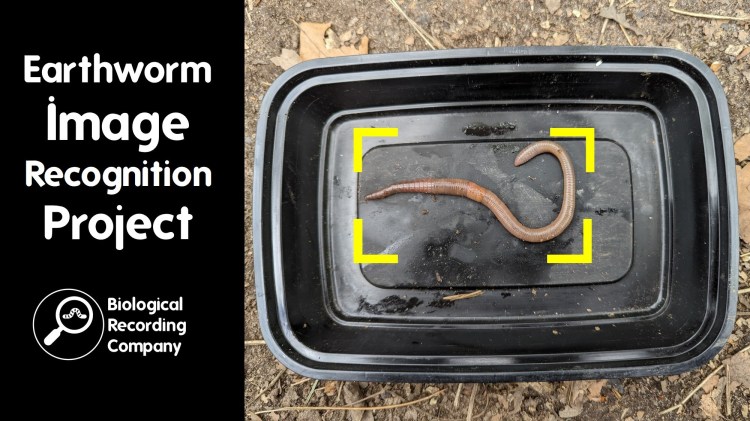
We have different pipelines for very small things. It’s called ultra-low input sequencing. There’s also a group working on protists which are single-celled eukaryotes. The procedure for collecting material and processing it is different depending on the group. For example, both the Natural History Museum DToL team and our team at Wytham Woods have tried different methods for dealing with earthworms as these can be tricky – check out Keiron’s blog on Sequencing British Earthworms to find out more.
Will the work of this project inform the ever-changing taxonomy of species and when will we have a complete taxonomy?
If the only focus of the project was phylogeny it would be far cheaper to just barcode all species and that is exactly what the global Barcode of Life project is doing. However, barcoding data only gives us part of the picture. This is where full genome sequencing can help us solve some of the complexities in phylogeny and will inevitably help stabilise the phylogeny even more. In theory, we could reach a point where we have sequenced the genomes of all species and have fully resolved taxonomic disputes, but in reality that will take a very long time and we may never get there. We are finding cryptic species all of the time and our understanding is improving as we go along. The species concept is quite a confusing term and the more we look at genetics the more that we see that there is gene transfer even between species.
Is there a publicly available checklist of which species you have sequenced to date and which you haven’t?
It’s really difficult to maintain a full checklist because there are so many species and our understanding of species and phylogenies is changing all the time. There is the Darwin Tree of Life Data Portal that lists all of the species that have been sent to the Wellcome Sanger Institute and where they are in the sequencing process, but we don’t currently have a publicly available checklist as this would be too time-consuming to maintain, however, this is something that might be developed in the future
What do you think the future role of Natural History Museums is that traditionally houses physical collections?
Natural History Museums often play an important role in genetic studies and although we are out sampling for fresh material to sequence the full genome, museum specimens can still be used for some genetic analysis. What is possible now is more advanced than 10 or 20 years ago and who knows what may be possible in 10 or 20 years’ time. Museum specimens help us look at changes over time and retaining and adding to these collections is important for future studies. In fact, the reference genomes produced by our project will unlock loads of exciting new ways to sequence museum specimens.
What’s been your personal highlight of the project so far?
My favourite aspect has been working at the genomic observatory at Wytham Wood and studying this site in great detail. I’m out sampling throughout the whole year and it’s amazing how many different species we find when we’ve looked at this one site in detail. We’ve had some real surprises that are outside of a species’ known range and we’ve had some really rare things too.
Literature references
- Crowley et al. (2023) A sampling strategy for genome sequencing the British terrestrial arthropod fauna.
https://wellcomeopenresearch.org/articles/8-123 - Mulhair et al. (2023) Diversity, duplication, and genomic organization of homeobox genes in Lepidoptera.
https://europepmc.org/article/pmc/pmc9977156 - Vancaester and Blaxter (2023) Phylogenomic analysis of Wolbachia genomes from the Darwin Tree of Life biodiversity genomics project. https://journals.plos.org/plosbiology/article?id=10.1371/journal.pbio.3001972
Further info
- Darwin Tree of Life website
- Wytham Woods Genome Project
- Darwin Tree of Life Data Portal
- Barcode Of Life database
- UK Species Inventory
- Sequencing British Earthworms blog
entoLIVE
entoLIVE webinars feature guest invertebrate researchers delving into their own invertebrate research. All events are free to attend and are suitable for adults of all abilities – a passion for invertebrates is all that’s required!
- Donate to entoLIVE: https://www.gofundme.com/f/entolive-2026
- Upcoming entoLIVE webinars: https://www.eventbrite.com/cc/entolive-webinars-74679
- entoLIVE blog: https://biologicalrecording.co.uk/category/entolive-blog/
- entoLIVE on YouTube: https://youtube.com/playlist?list=PLuEBNUcfMmE95Re19nMKQ3iX8ZFRFgUAg&feature=shared
entoLIVE is only possible due to contributions from our partners and supporters.
- Find out about more about the British Entomological & Natural History Society: https://www.benhs.org.uk/
- Check out the Royal Entomological Society‘s NEW £15 Associate Membership: https://www.royensoc.co.uk/shop/membership-and-fellowship/associate-member/

More on invertebrates
 Biological Recording
5 thoughts on “Unlocking Invertebrate Genomes: Trying to Sequence Every Species”