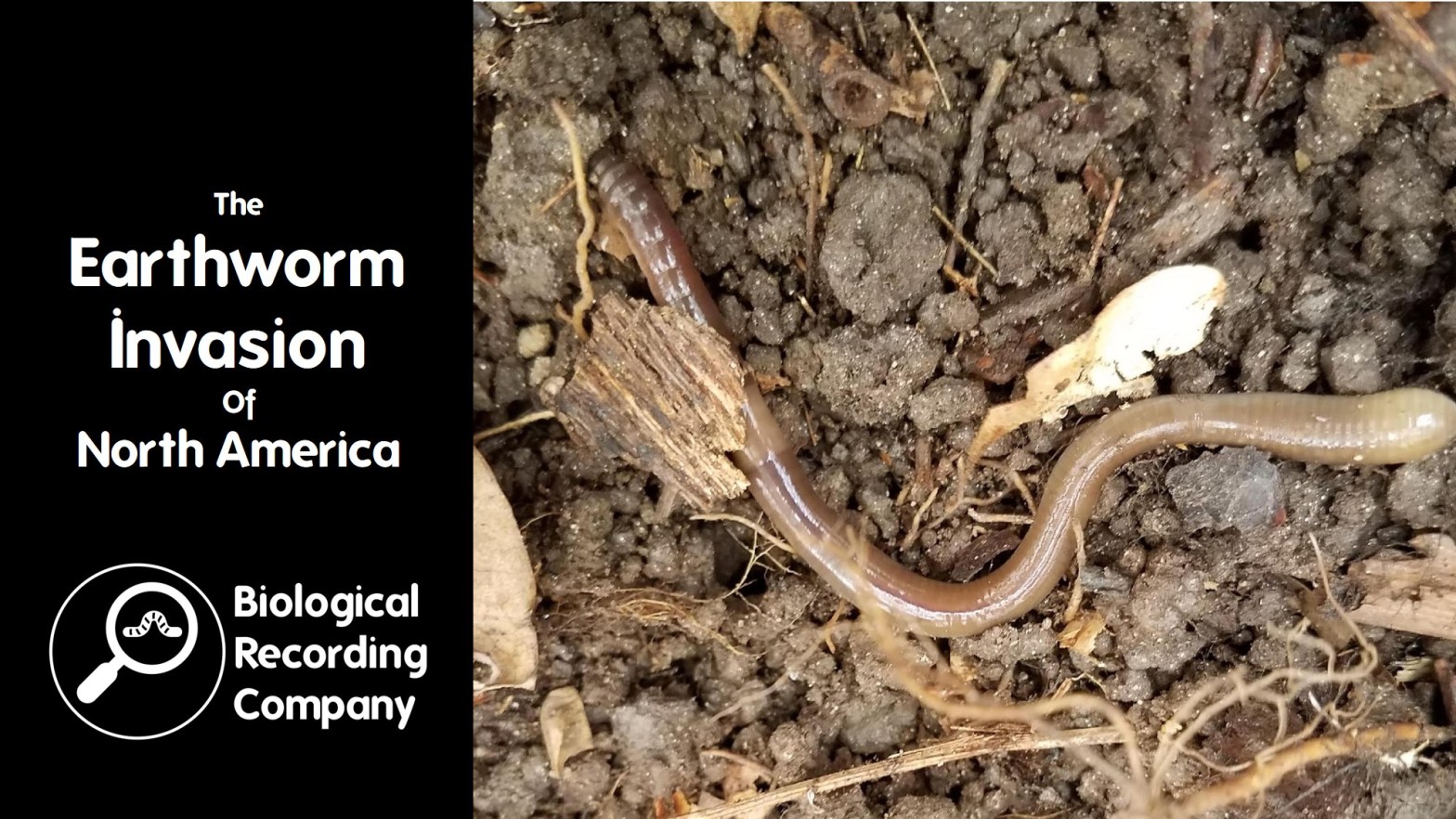
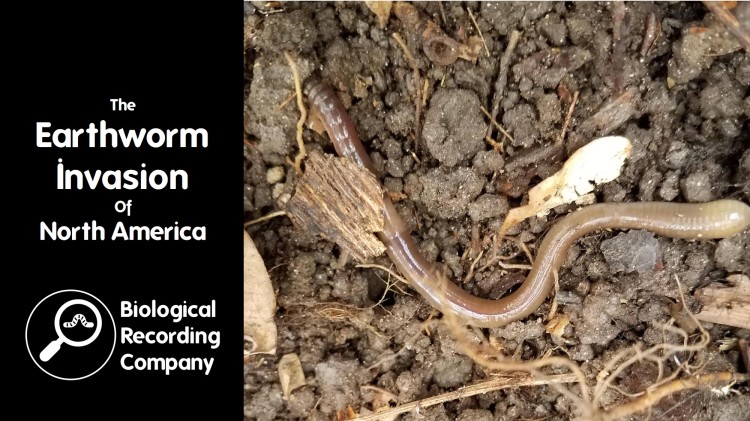
Earthworms are well-known ecosystem engineers, profoundly affecting soil processes. They are generally considered beneficial organisms that improve soil quality. But what happens when earthworms are introduced to ecosystems that have evolved with no or very different kinds of earthworms? Prof Katalin Szlávecz discusses the impacts of non-native earthworms in the Atlantic region of North America.
Katalin Szlávecz is a Research Professor in the Department of Earth and Planetary Sciences at Johns Hopkins University (USA). Katalin does research on soil biodiversity, earthworm ecology and soil ecosystem services. Her research focuses on human-modified landscapes, including secondary forests, crop fields, and the urban landscape.
Q&A with Prof Katalin Szlávecz
- Can you recommend a book about the earthworm invasion of North America?
There are three books that come to mind, but both of these are relatively old now. The first is a booklet by Cindy Hale and is a good starting point for beginners interested in the natural history and of invasive species and their identification. The second is edited by Paul Hendrix and contains a collection of scientific papers on the subject of invasive earthworms. The third option is the textbook by Clive Edwards covering the biology and ecology of earthworms.- Hale, C. M. (2013) Earthworms of the Great Lakes. Duluth: Kollath+Stensaas Publishing.
- Hendrix, P. F. (Ed.) (2006). Biological Invasions Belowground: Earthworms as Invasive Species. Dordrecht: Springer.
- Edwards, C. A. & Arancon, N. Q. (2022). Biology and Ecology of Earthworms (4th ed.). New York: Springer.
- Could an earthworm predator, such as the New Zealand Flatworm (Arthurdendyus triangulatus), be used as a possible biological control agent for earthworms in North America?
Our history is full of examples of failed attempts to control one invasive species by introducing a predator. Often, these predators are not specific in their diet, and end up decimating the native species. Examples include the African Cane Toad to Australia or the mongoose to the Caribbean Islands. We don’t know if New Zealand Flatworms would survive and we don’t know what the impact could be on native earthworms and other species. The few success stories using such methods have usually followed in-depth and long-term studies on the potential impacts of a non-native predator. - Are the non-native earthworm species a notifiable pest in the USA?
Earthworms are not included in this category and the public is not asked to submit sightings of earthworms. Some government agencies, such as the U.S. Forest Service, U.S. Fish and Wildlife Service and Department of Natural Resources, have now started focusing on this more and funds systematic surveys to monitor the problem – so most of the data comes from researchers. A lot of the questions that we get are from gardeners regarding the Jumping Worms (genera Amynthasa and Metaphire). In the US we have a habit of mulching our flowerbeds, around trees, and even forest trails. This practice facilitates the spread of jumping worms causing concerns in gardeners. In some states, e.g. California and Minnesota, invasive earthworms are species of concern, and there are regulations in place in which it is illegal to transport them or soil into the state. Plants can be transported bare root only. - Is North America at risk of a third invasion?
We don’t know if a third invasion is on the horizon or where it would come from if it was. Inspections at the border are now being done much more efficiently and there are now extremely strong restrictions regarding transport of soil into the US, even for scientific purposes.
Literature references
- Chang C.-H., Snyder, B. A. & Szlávecz, K. (2016). Asian pheretimoid earthworms in North America north of Mexico: An illustrated key to the genera Amynthas, Metaphire, Pithemera, and Polypheretima (Clitellata: Megascolecidae). Zootaxa, 4179, 495-529. DOI: 10.11646/zootaxa.4179.3.7
- Chang, C.-H., Johnston, M., Görres, J. H., Dávalos, A., McHugh, D. & Szlávecz, K (2017). Co-invasion of three Asian earthworms, Metaphire hilgendorfi, Amynthas agrestis and Amynthas tokioensis in the USA. Biological Invasions, 20, 843-848. DOI: 10.1007/s10530-017-1607-x
- Chang, C.-H., Szlávecz, K. & Buyer, J. (2017). Amynthas agrestis invasion increases microbial biomass in Mid-Atlantic deciduous forests. Soil Biology and Biochemistry, 114,189-199. DOI: 10.1016/j.soilbio.2017.07.018
- Chang, C.-H., Bartz, M. L., Brown, G., Callaham Jr., M.A., Cameron, E. K., Dávalos, A., Dobson, A., Görres, J. H., Herrick, B. M., Ikeda, H., James, S. W., Johnston, M. R., McCay, T. S., McHugh, D., Minamiya, Y., Nouri-Aiin, M., Novo, M., Ortiz-Pachar, J., Pinder, R. A., Ransom, T., Richardson, J. B., Snyder, B.A. & Szlávecz , K. (2021). The second wave of earthworm invasions in North America: Biology, environmental impacts, management and control of invasive “jumping worms”. Biol Invasions, 23, 3291–3322. DOI: 10.1007/s10530-021-02598-1
- Csuzdi, C., Chang, C.-H., Pavlícek, T., Szederjesi, T., Esopi, D. & Szlávecz.,K. (2017). Molecular phylogeny and systematics of native North American lumbricid earthworms (Clitellata: Megadrili). PLoS ONE, 12 (8), e0181504. DOI: 10.1371/journal.pone.0181504
- Ferlian, O, Eisenhauer, N, Aguirrebengoa, M, et al. (2018). Invasive earthworms erode soil biodiversity: A meta-analysis. J Anim Ecol., 87, 162–172. DOI: 10.1111/1365-2656.12746
- Hendrix, P. F., Callaham Jr., M. A., Drake, J. M., Huang, C.-Y., James, S. W., Snyder, B. A. & Zhang, W. (2008) Pandora’s Box Contained Bait: The Global Problem of Introduced Earthworms. Annual Review of Ecology, Evolution, and Systematics, 39 (1), 593-613. DOI: 10.1146/annurev.ecolsys.39.110707.173426
- Ma, Y., Filley, T. R., Johnston, C. T., Crow, S. E., Szlávecz , K. & McCormick, M. K. (2013). The combined controls of land use legacy and earthworm activity on soil organic matter chemistry and particle association during afforestation. Org. Geochem., 58, 56-68. DOI: 10.1016/j.orggeochem.2013.02.010
- McCay, T.S., Brown, G., Callaham, M.A. Jr., Chang, C-H., Dávalos, A., Dobson, A., Görres, J.H., Herrick, B.M., James, S.W., Johnston, M.R., McHugh, D., Minteer, T., Moore, J.-D., Nouri-Aiin, M., Novo, M., Ortiz-Pachar, J., Pinder, R.A., Richardson, J.B., Snyder, B.A. & Szlávecz, K. (2020). Tools for monitoring and study of peregrine pheretimoid earthworms (Megascolecidae). Pedobiologia, 83, 150669. DOI: 10.1016/j.pedobi.2020.150669
- McCormick, M. K., Parker, K., Szlávecz, K. & Whigham, D. (2013). Native and exotic earthworms affect orchid seed loss. AoB PLANTS, 5: plt018. DOI:10.1093/aobpla/plt018
- Szlávecz, K., McCormick, M. K., Xia, L, Saunders, J., Morcol, T., Whigham, D., Filley, T. & Csuzdi, C. (2011). Ecosystem effects of non-native earthworms in Mid-Atlantic deciduous forests. Biological Invasions, 15, 1165-1182. DOI: 10.1007/s10530-011-9959-0
- Szlávecz, K., Chang, C.-H., JL Burgess, J. L. & Csuzdi, C. (2014). Earthworms (Annelida: Clitellata) of Plummers Island, Maryland, USA, with description of a new species. Proc. Biol. Soc. Washington, 126, 312-322. DOI: 10.2988/0006-324X-126.4.312
- Szlávecz, K., C-H Chang, C.-H., Bernard, M. J., Pitz, S. L., Xia, L., Ma, Y., McCormick, M. K., Filley, T., Yarwood, S. A. & Csuzdi, C. (2018). Litter quality, dispersal and invasion drive earthworm community dynamics and forest soil development. Oecologia, 188(1), 237-250. DOI: 10.1007/s00442-018-4205-4
Further info and links
- Worms of the World blog with links to other presentations: https://biologicalrecording.co.uk/2023/03/25/worms-of-the-world/
- Explore invertebrate research with the entoLIVE blog: https://biologicalrecording.co.uk/category/entolive-blog/
- Upcoming free entoLIVE webinars: https://www.eventbrite.co.uk/cc/entolive-webinars-74679
- Full list of courses and events from the Biological Recording Company: https://www.eventbrite.co.uk/o/the-biological-recording-company-35982868173
More on earthworms
 Biological Recording
2 thoughts on “The Earthworm Invasion of North America”