Take a journey around the world, detailing some of the weird and wonderful earthworms discovered by Dr Sam James, and the stories behind his research expeditions at home and in the far-flung corners of the world.
Dr Sam James is one of the world’s leading experts in earthworm ecology and diversity. Dr James has a PhD in Biology and was an organic farmer in Iowa for 10 years, where he taught a wide range of life science courses at several universities. He also has many international research collaborations in Europe, Asia, and South America.
Q&A with Dr Sam James
- What percentage of earthworm species would you estimate have been described to science to date?
I can still find new species in the USA – I recently received a new species from Oklahoma that I will need to describe! There are still large areas that have never been searched for earthworms. Overall I don’t think we’ve even found half of the earthworm species that exist in the world. I wouldn’t be surprised if we could double the number of species globally just from French Guiana, Guyana, Suriname, Venezuela and Brazil. - Which country do you think is potentially sitting on the highest number of undescribed species?
Tropical countries have the highest diversity. French Guiana currently holds the record for diversity within a hectare. Guyana and Suriname are also very diverse with an enormous number of earthworms. We could probably say the same thing about Brazil, Thailand, Laos and Vietnam. there are large areas in India and China where the earthworm species haven’t been studied. Any place that has topographical complexity (such as mountains and valleys) with intact original vegetation has a large number of earthworms. I had specimens sent to me from New Zealand and I couldn’t identify more than half of them! - What is the most peculiar characteristics across all the earthworms you have seen?
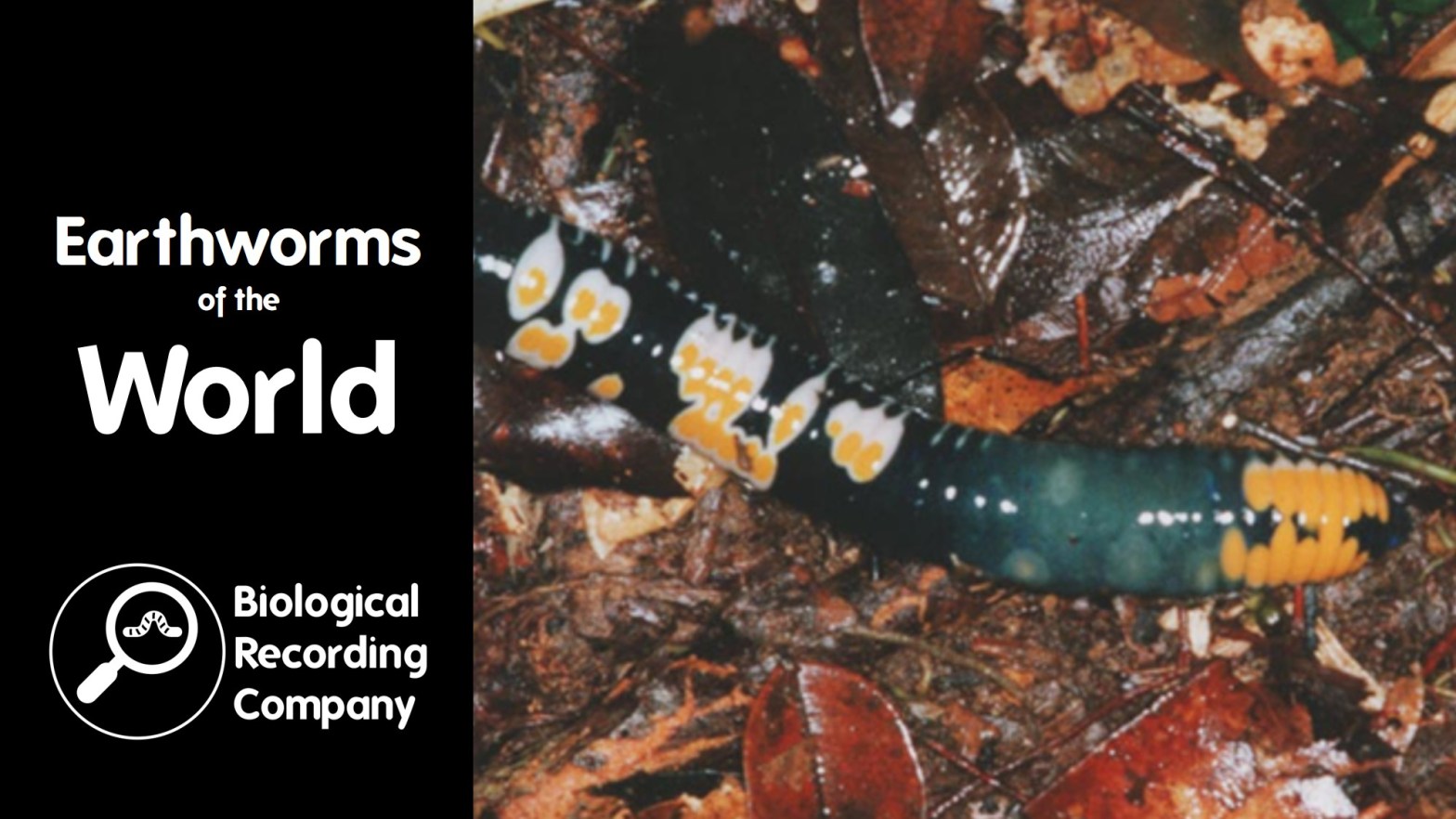
The Fried Eggs Worm (Archipheretima middletoni) has to be at the top for the weird and wonderful! And not only for the colouration! Your first thought is how can something that is essentially a piece of meat crawling around the floor be coloured so brightly, but it was surprisingly difficult to see. The yellow and white spots look like reflections of light from wet leaves on the forest floor, so it probably provides the worm with great camouflage from predators that don’t see colour so well – it took me a while to get my eye in for them. The young earthworms of this species were also only found 2-3 metres off the ground in the leaf axis of these Pandanus plants and I’d only ever find one per plant. The adults were free-living on the ground – not even underneath the leaf litter! - Have there been any studies into how the littoral species manage to tolerate the saline/osmotic stress of seawater?
I found a small pink worm in the Virgin Islands in soil well above sea level. This was soil watered by the rain. It turned out to be Pontodrilus litoralis. A short distance away on the beach I found another P. litoralis living in full strength seawater sub-irrigated sand. That is quite a remarkable osmotic feat for a soft-bodied animal that breathes through its skin – to be able to survive in these two extremes! - Is it easy to find the giant earthworm species in the places where they occur?
Giant earthworms are really hard to catch. Finding the signs isn’t so difficult – their large casts and large burrows give them away. Digging them out is no mean feat. The best way to catch them is to find where they live and stake them out until you get rain and then collect them up when they have come to the surface.
Literature references
- Anderson, F. E., Williams, B. W., Horn, K. M., Erséus, C., Halanych, K. M., Santos, S. R., & James, S. W. (2017). Phylogenomic analyses of Crassiclitellata support major Northern and Southern Hemisphere clades and a Pangaean origin for earthworms. BMC Evolutionary Biology, 17(1), 123. DOI: 10.1186/s12862-017-0973-4
- James, S. W. (2009). Revision of the earthworm genus Archipheretima Michaelsen (Clitellata: Megascolecidae), with descriptions of new species from Luzon and Catanduanes Islands, Philippines. Organisms Diversity & Evolution, 9(3), 244.e1-244.e16. DOI: 10.1016/j.ode.2009.03.004
Further info and links
- Worms of the World blog with links to other presentations: https://biologicalrecording.co.uk/2023/03/25/worms-of-the-world/
- Explore invertebrate research with the entoLIVE blog: https://biologicalrecording.co.uk/category/entolive-blog/
- Upcoming free entoLIVE webinars: https://www.eventbrite.co.uk/cc/entolive-webinars-74679
- Full list of courses and events from the Biological Recording Company: https://www.eventbrite.co.uk/o/the-biological-recording-company-35982868173
More on earthworms
 Biological Recording
One thought on “Earthworms of the World”