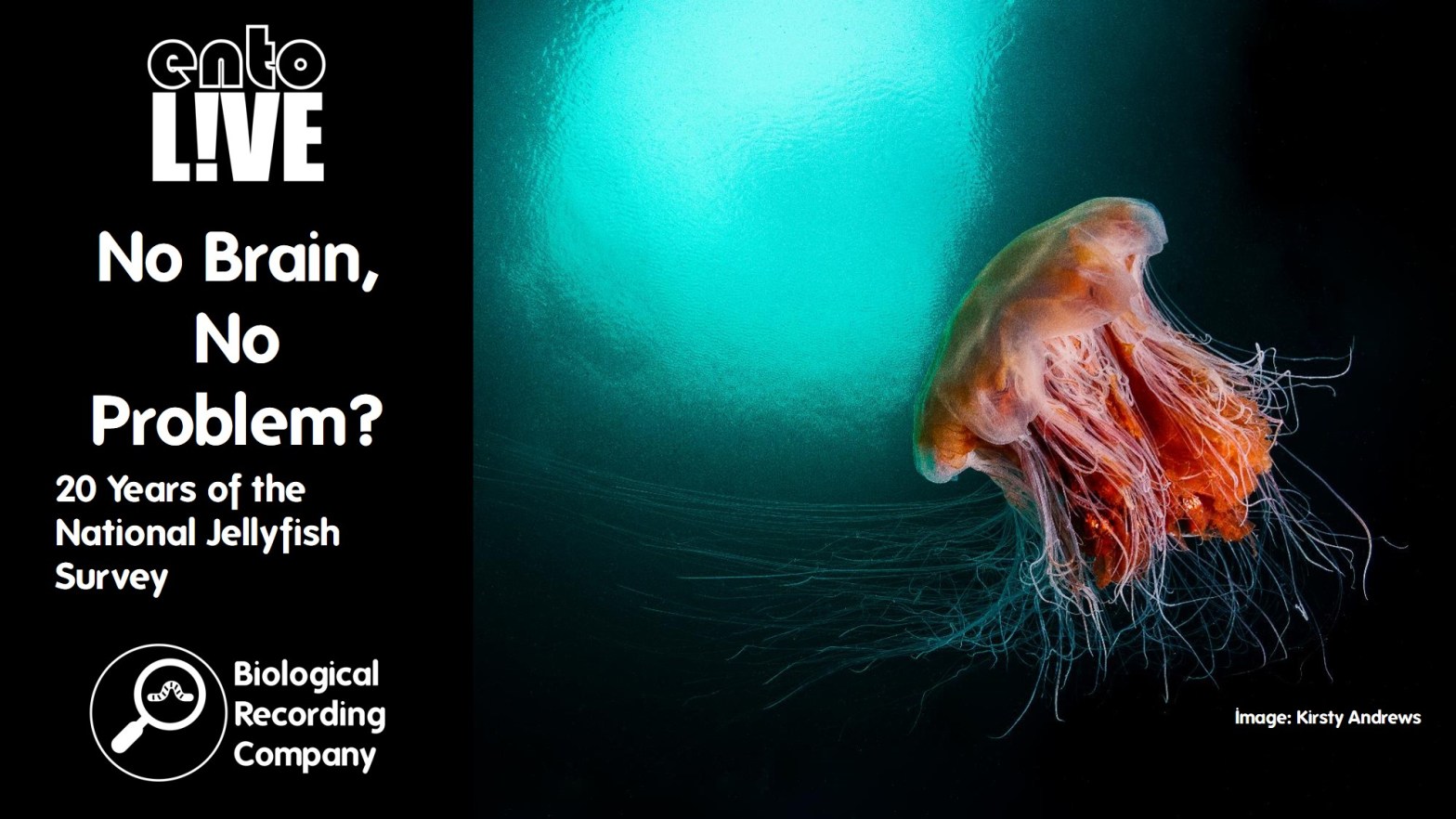
Every year, as spring creeps in, jellyfish arrive around the UK coastline. Since 2003, the Marine Conservation Society, along with thousands of citizen scientists all around the country, has been taking a deeper dive into their movements and how they might influence UK turtle populations. 20 years on, we explore what the data can tell us about these weird and wonderful marine invertebrates.
Amy Pilsbury runs the national jellyfish survey at the Marine Conservation Society alongside Peter Richardson (Head of Ocean Recovery) and research partners from Plymouth and Exeter universities. Amy’s background spans science communication and marine research, mostly surrounding micro/macroalgae and phytoplankton. With experience in both worlds, she now works as a citizen science professional to better connect people with science using engaging, interactive projects, like the National Jellyfish Survey.

Q&A with Amy Pilsbury
Will multiple adult jellyfish result from one polyp?
The number of adult jellyfish resulting from a single polyp can vary depending on the species. It can range quite considerably, but usually around 10-20 ephyra (juvenile jellyfish) are produced.
Is the Portuguese Man O’ War the same as a Blue Bottle Jellyfish?
Yes – these are both considered to be the same organism, with the scientific name Physalia physalis.
Is the Blue Jellyfish the same as Cyanea lamarckii?
Yes – we try to use common names to make jellyfish spotting more accessible to the public, but it’s worth noting that these common names can be different in different parts of the world (or even within a country). Scientific names are great for standardising what we call a species as they are universal and transcend language.
Is there an easy way to tell the difference between a Portuguese Man O’ War and a By-The-Wind-Sailor when out of the water on the beach?
A couple of things can help here. Firstly, look at the tentacles. Portuguese Man O’ War has long tentacles whereas By-The-Wind-Sailor has short tentacles. Portuguese Man O’ War also has an air bladder for floating on the surface – though it can deflate this to try and escape from predators!
Do all of the UK jellyfish have the ability to sting?
All of the UK jellyfish can sting, but not all are painful and the severity of the sting varies by species. The severity of the sting to humans is noted for each species on our Identifying Jellyfish webpage.
Where do UK species of jellyfish go during the periods they are not sighted in the UK?
This is a great question and something that we’d like to understand much more. The range of a species varies greatly depending on the species. We might also see species disappear at certain stages of their lifecycle when they are growing as settled polyps on the seabed, usually during the winter months.
Finding out what’s going on outside of the UK is something that I’m really interested in looking into further – so I’d love to hear from other surveys taking place outside of the UK so that we can compare results!
Do you pick up records from other recording sites such as iRecord or iNaturalist?
At the moment we only have the capacity to collect data through our Report A Jellyfish Sighting webform or those records emailed to me directly.
Do you have a recording form template if people want to do a survey?
The National Jellyfish Survey relays on reports of sightings as and when they happen so we don’t have instructions for walking a transect and reporting absence – though this is something we’d like to explore in the future. Check out our Report A Jellyfish Sighting webform top see what information we ask people to record when they spot a jellyfish, you can access this from your mobile device too.
Is it helpful to submit backdated sighting reports?
Absolutely – the more data that we have the better, and historic data may help shed light on trends from previous years. If you have lots of sightings and would prefer to send a spreadsheet with the data, you can email it to me directly!
What was it that caused the slight peak in February sightings in the graph that you presented?
From memory, I believe this may have coincided with weather and an increase in Portuguese Man O’ War Sightings. We still have so much to learn about the patterns and what causes them. It’s previously been suggested that jellyfish populations adhere to a 20-year cycle – so we need more data over a longer period of time to better understand what the patterns are telling us.
Further info
- Jellyfish ID guide
- Report your jellyfish sighting
- What’s been spotted so far
- Cnidaria in UK coastal waters paper
- Annual turtle reports
- Report your marine turtle sighting
- Other ways to get involved at Marine Conservation Society
entoLIVE
entoLIVE webinars feature guest invertebrate researchers delving into their own invertebrate research. All events are free to attend and are suitable for adults of all abilities – a passion for invertebrates is all that’s required!
- Donate to entoLIVE: https://www.gofundme.com/f/entolive-2025
- Upcoming entoLIVE webinars: https://www.eventbrite.com/cc/entolive-webinars-74679
- entoLIVE blog: https://biologicalrecording.co.uk/category/entolive-blog/
- entoLIVE on YouTube: https://youtube.com/playlist?list=PLuEBNUcfMmE95Re19nMKQ3iX8ZFRFgUAg&feature=shared
entoLIVE is only possible due to contributions from our partners and supporters.
- Find out about more about the British Entomological & Natural History Society: https://www.benhs.org.uk/
- Check out the Royal Entomological Society‘s NEW £15 Associate Membership: https://www.royensoc.co.uk/shop/membership-and-fellowship/associate-member/

More on marine biology


 Biological Recording
This is fantastic!
entoL!VE is such an inspiration – the webinars are well-presented and to get the recording plus Q&A blog so quickly after the event is amazing.
Well done! Thank you!
LikeLike