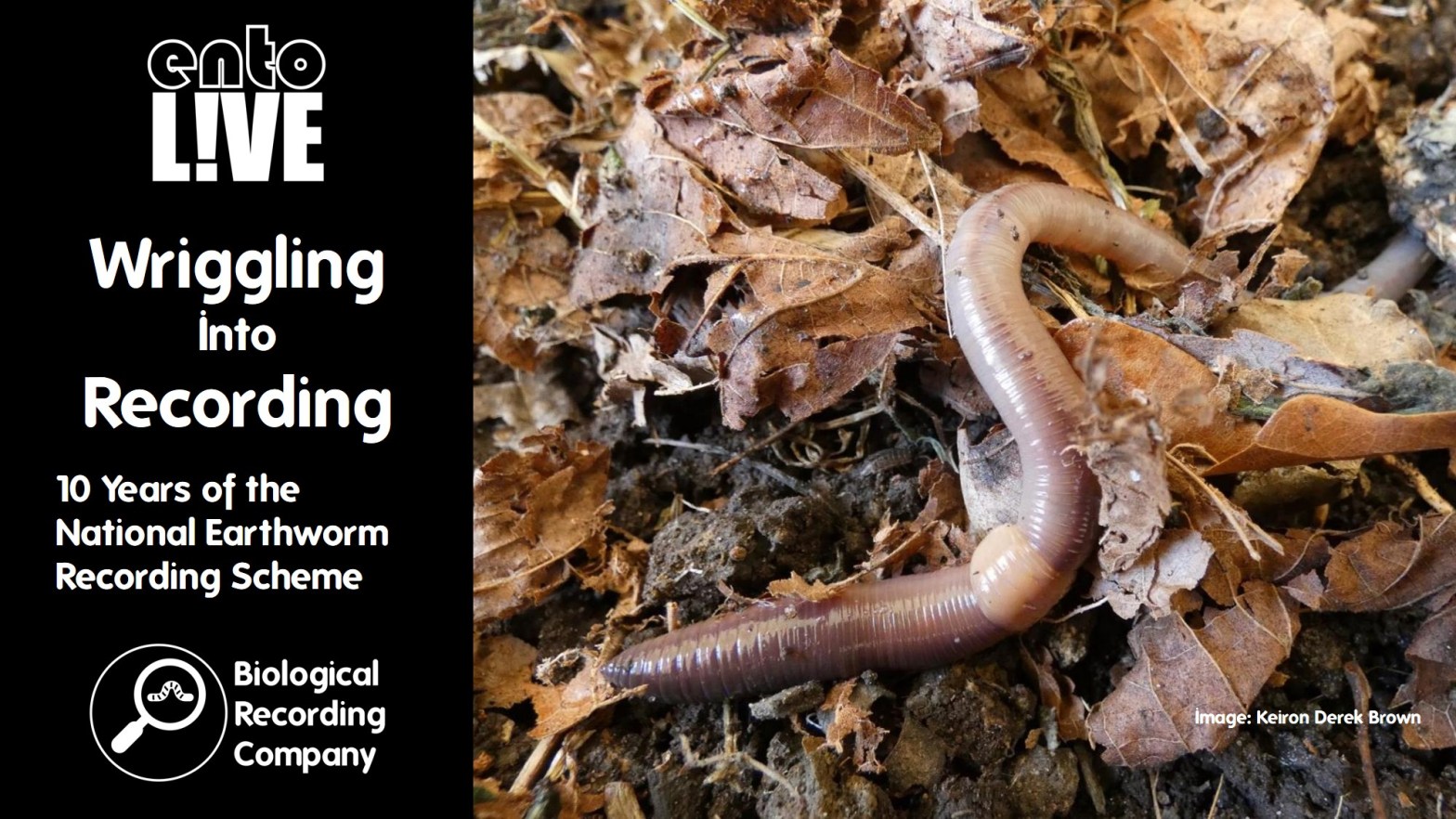
Earthworms are widely-regarded as ecologically important and recognised as ecosystem engineers (i.e. responsible for creating the habitats in which they live). However, they remain hugely under-studied and we have little species-specific information on the 31 species that inhabit the British Isles. The National Earthworm Recording Scheme aims to address this knowledge gap. This free webinar will explore how earthworm researchers are using the 20,000+ earthworm records generated over the last 10 years to improve our understanding of the ecology, behaviour, populations, distributions and habitat associations of different species of earthworm, as well as a current project to assess the provisional conservation status of all British earthworm species.
Q&A with Keiron Derek Brown
Keiron Derek Brown is the UK’s national recorder for earthworms, a trustee of the Earthworm Society of Britain and delivers training on earthworm ecology, surveying and identification.
Is there a simple use of earthworm counts or similar as a proxy for soils health?
There is always a danger that the results of earthworm counts can be misinterpreted due to the patchiness of earthworm populations in soils. Dr Mark Hodson goes into detail about this subject in the Can You Use Earthworms To Indicate Healthy Soil? Distribution & Sampling Natural History Live webinar. The five-year Soil Biology and Soil Health (SBSH) Partnership (2017–2022) was a cross-sector programme of research and knowledge exchange. It was designed to help farmers and growers maintain and improve the productivity of UK agricultural and horticultural systems, through a better understanding of soil biology and soil health. Report two details the development of a soil health scorecard, which includes earthworm counts.
Is farmland too broad for a habitat category?
The habitat classification system that we use for the National Earthworm Recording Scheme has more detailed habitat classifications (such as arable land or pasture for farmland). This is the same for other broad habitat classifications, such as grassland and woodland. Going into more detail may very well reveal even more about specific species, but it was just a little beyond our capacity for the upcoming Forest Research paper so we intentionally used broad habitat types.
How useful or valuable is the citizen science data on a local scale?
This depends on the recording scheme or project. For earthworms, all data is useful as we are so lacking in data. The data from biological recorders could be considered citizen science data (as opposed to research data) and it helps balance some of the biases within the data. At the local scale we still have a lot of information to gather!
To what extent do new methods of identifying earthworms (e.g. eDNA) replace or complement traditional taxonomy-based methods on morphology?
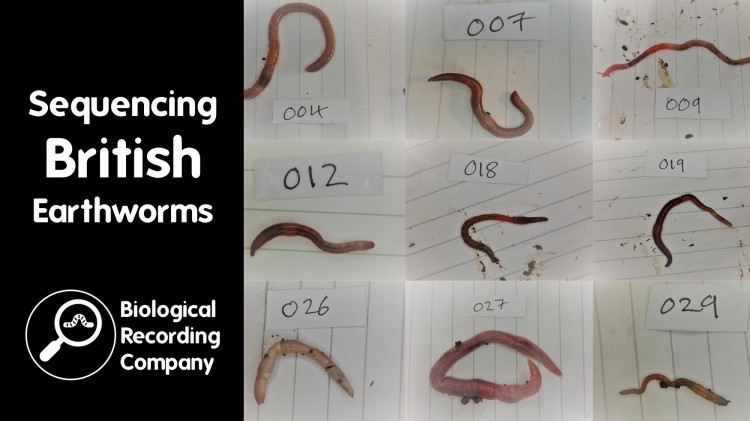
eDNA can be used to detect if an earthworm species was recently present in soils. However, it’s important that traditional methods are still taught and practised. With earthworms, our information about variation within species is still limited – I find myself regularly submitting specimens to the Natural History Museum as the specimens that I find are more varied than the scientific literature states. Our understanding of earthworm genetic information is improving all the time, and I have been actively involved in sequencing British earthworms as part of the Darwin Tree of Life project. eDNA can tell us how many species are detected, but without the morphological and sequencing work done prior we can’t link these records to actual species.
Are earthworm species spread by fishermen?
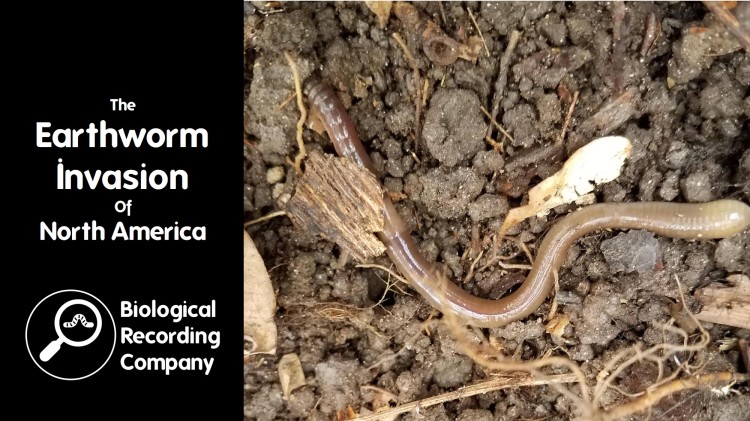
This is not a known issue in the UK. We don’t tend to have issues with non-native invasive species of earthworms in the UK and Ireland – the species that occur naturally in the British Isles can be problematic in other regions. This is an issue in North America, where infection points do coincide with fishing hotspots.
Where are the next training courses going to be?
We have courses and events coming up in North Yorkshire, Lancashire, Wiltshire, Herefordshire and London. However, we’re always on the lookout for more places to deliver training and events. For ID courses, we need a host that has access to microscopes – which is often the limiting factor. We invite any potential hosts to get in touch and you can find the latest event listings on the Earthworm Society upcoming events pages.
How do you prepare an earthworm for identification with a microscope?
Ideally, you need the FSC Key to the Earthworms of the UK & Ireland and a dissecting (or stero) microscope. The earthworm needs to be killed and preserved, before being viewed in a petri dish of preservative. For more detailed guidance, check out the downloadable Earthworm Recorder’s Handbook.
Literature References
- Ashwood et al (2024) Earthworm records and habitat associations in the British Isles: https://doi.org/10.1016/j.ejsobi.2024.103642
- Bottinelliet al (2020) An explicit definition of earthworm ecological categories – Marcel Bouché’s triangle revisited: https://doi.org/10.1016/j.geoderma.2020.114361
- Carpenter et al (2012) Mapping of earthworm distribution for the British Isles and Eire highlights the under-recording of an ecologically important group: http://dx.doi.org/10.1007/s10531-011-0194-x
- Jones & Eggleton (2014) Earthworms in England: distribution, abundance and habitats (NECR145): https://publications.naturalengland.org.uk/publication/5174957155811328
Further info
- Sign up to the free National earthworm Recording Scheme Bulletin
- Learn more about the National Earthworm Recording Scheme
- Upcoming earthworm training courses on the ESB website
- IUCN Red Lists
entoLIVE
entoLIVE webinars feature guest invertebrate researchers delving into their own invertebrate research. All events are free to attend and are suitable for adults of all abilities – a passion for invertebrates is all that’s required!
- Donate to entoLIVE: https://www.gofundme.com/f/entolive-2026
- Upcoming entoLIVE webinars: https://www.eventbrite.com/cc/entolive-webinars-74679
- entoLIVE blog: https://biologicalrecording.co.uk/category/entolive-blog/
- entoLIVE on YouTube: https://youtube.com/playlist?list=PLuEBNUcfMmE95Re19nMKQ3iX8ZFRFgUAg&feature=shared
entoLIVE is only possible due to contributions from our partners and supporters.
- Find out about more about the British Entomological & Natural History Society: https://www.benhs.org.uk/
- Check out the Royal Entomological Society‘s NEW £15 Associate Membership: https://www.royensoc.co.uk/shop/membership-and-fellowship/associate-member/

More on earthworms
 Biological Recording
2 thoughts on “Wriggling Into Recording: 10 Years of the National Earthworm Recording Scheme”