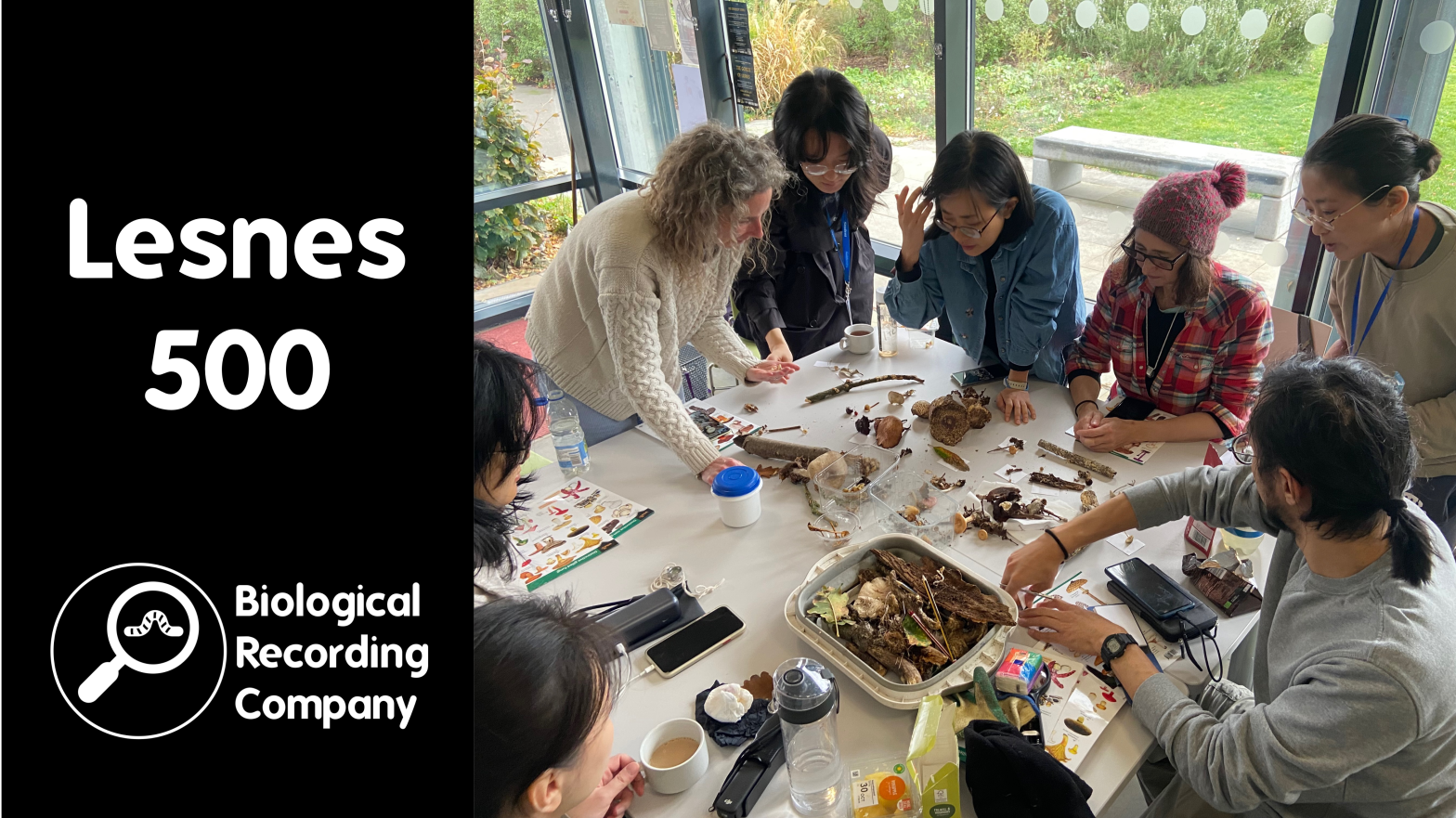
During 2025 and 2026, the Biological Recording Company is collaborating with the London Borough of Bexley to deliver a series of Field Recorder Days at Lesnes Abbey Woods, a large woodland in south London famous for its ruined abbey. These Field Recorder Days have been commissioned as part of Lesnes 500, a large-scale project made possible with a generous grant from the National Lottery Heritage Fund. Lesnes 500 commemorates 500 years since the ‘dissolution’ of Lesnes Abbey (when it stopped functioning as a formal abbey), and aims to engage local communities with Lesnes Abbey Woods through a range of events focused on heritage, creativity, nature and education. We are contributing to the nature and education aspect!
Field Recorder Days
Our Field Recorder Days are a core part of our company’s mission to get more people observing wildlife and submitting data into biological recording systems. Each day involves visiting a site as a group to make field observations, collecting specimens for identification at a later date if needed, and submitting data to iRecord. Each of our Field Recorder Days has a specific taxonomic focus and is led by a species-group specialist. Attendance is free, and recorders of all levels (from newcomer to seasoned pro) are welcome, but booking is mandatory as spaces are limited. Check out our Field Recorder Days events at Lesnes Abbey Woods Fields below.
Upcoming Field Recorder Day events at Lesnes Abbey Woods

Beetle Field Recorder Day
24 Mar 2026 @ Lesnes Abbey Woods
Join Connor Butler to help record the beetles of Lesnes Abbey Woods.

Mollusc Field Recorder Day
23 Apr 2026 @ Lesnes Abbey Woods
Join Imogen Cavadino-Phillips to explore and record the molluscs of Lesnes Abbey Woods.
General Field Recorder Day
16 May 2026 @ Lesnes Abbey Woods
Join us for a General Field Recorder Day – no taxonomic focus, we’ll be recording everything!
Past Field Recorder Day Events at Lesnes Abbey Woods
Read about what found and got up to on our Field Recorder Day events at Lesnes Abbey Woods so far.
Meadow Botany Field Recorder Day (24/07/2025)
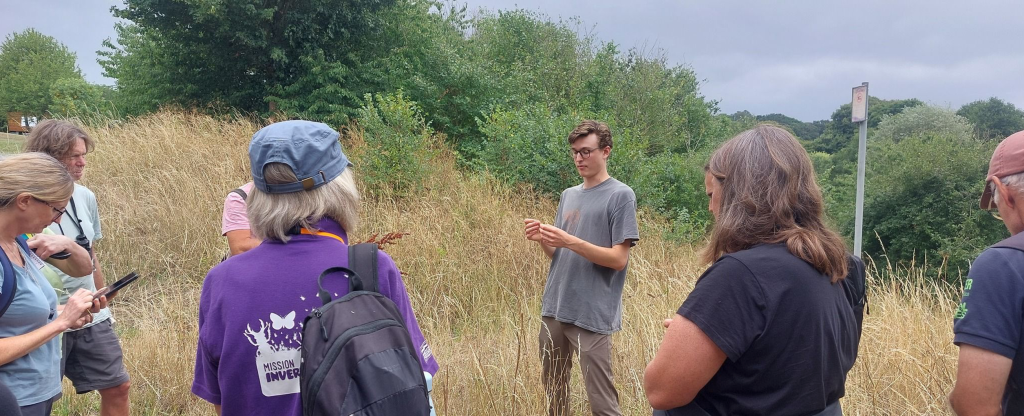
A Meadow Botany Field Recorder Day was held at Lesnes Abbey Woods on 24th July 2025. The event was led by botanist and joint-Middlesex county plant recorder Henry Miller and attended by 26 participants. Given the focus of the day was specifically on meadow botany, we focused our recording for the day on the grassland areas to the north of the Lesnes Abbey Woods site, rather than venturing in the woodland. The participants split into groups and focused on finding as many different plant species as possible within assigned 100 × 100 m grid cells. Across the day, participants generated an impressive 286 total records and recorded 94 different plant species.
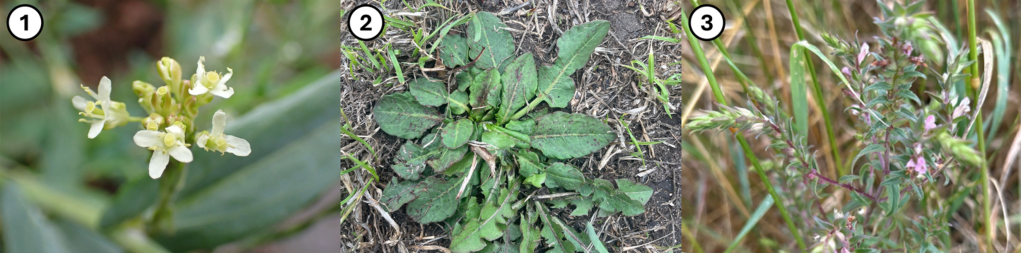
Three of the most notable species found on the day included:
- Tower Mustard Turritis glabra – An uncommon plant typically associated with free-draining, nutrient-poor sandy soils in, for example, lowland acid grassland or in periodically disturbed marginal habitats. The species is considered ‘very local and declining’ at the national level (Rose, 2006).
- Lesser Calamint Clinopodium calamintha – Another site rarity. This is a short-lived herb fond of south-facing banks and rough grassland. Formerly more widespread, it is now largely confined to roadsides, hedgebanks, railway banks, old pits, scrubby grassland, churchyards and waste ground (Walker, 2020).
- Fiddle Dock Rumex pulcher – One of the more uncommonly recorded species of dock, distinctive for its violin-shaped basal leaves. It is fond of slightly disturbed grassland, often where the habitat is grazed, trampled or mown (Pescott, 2020).
Plant Gall Field Recorder Day (20/09/2025)
A Plant Gall Recorder Day was held at Lesnes Abbey Woods on 20th September 2025. The event was led by LNHS Plant Gall Recorder Tommy Root and attended by 17 participants. Plant galls are a diverse group of structures formed when insects, mites, fungi or other organisms invade plant tissues. They come in a wide range of shapes and colours and, while often unusual in appearance, generally do not cause substantial harm to the plants they grow on. Across the day, participants generated 187 records including 44 gall-forming species.
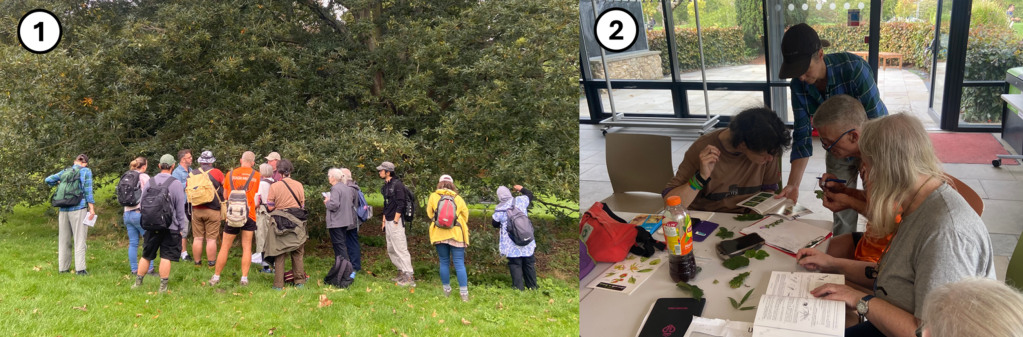
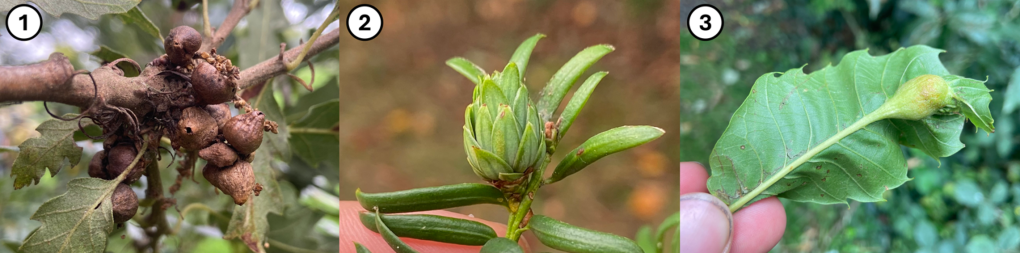
Oak trees proved especially productive, with many gall-forming species present at Lesnes. A large Turkey Oak Quercus cerris hosted the galls of the mite Aceria cerrea and the sexual generation galls of the wasp Andricus grossulariae. At a nearby English Oak Quercus robur we observed the spiky green galls of the agamic generation of A. grossulariae, a single Ram’s Horn Gall Andricus aries, and numerous Knopper Galls Andricus quercuscalicis scattered beneath the tree.
Recording in the parkland added additional discoveries on ornamental trees and shrubs, including the artichoke-like galls of Taxomyia taxi on Yew Taxus baccata and the pouch-like swellings of Dasineura urticae on Common Nettle Urtica dioica.
In the afternoon we moved to the woodland margin. A Sessile Oak Quercus petraea here yielded four additional cynipid wasp galls, and nearby elm leaves held mite galls of Aceria campestricola. Additional species from the woodland edge and interior included the fungal galls of Taphrina populina, leaf pustule galls of the wasp Ophelimus maskelli on Eucalyptus, the ‘lighthouse’ gall of the midge Hartigiola annulipes on Beech Fagus sylvatica and galls of the recently arrived Oriental Chestnut Gall Wasp Dryocosmus kuriphilus on Sweet Chestnut Castanea sativa.
Fungi Field Recorder Day (28/10/2025)
A Fungi Field Recorder Day was held at Lesnes Abbey Woods on 28th October 2025. The event was led by mycologist and botanist Mark Spencer and attended by 32 participants. Over the day, participants divided into small groups to survey different grid cells. Thanks to the use of indoor workspace in Lesnes Lodge, groups were able to sort and organise and identify their specimens over lunch and during an afternoon identification session. Across the day, participants generated 126 records, including 62 fungi species.
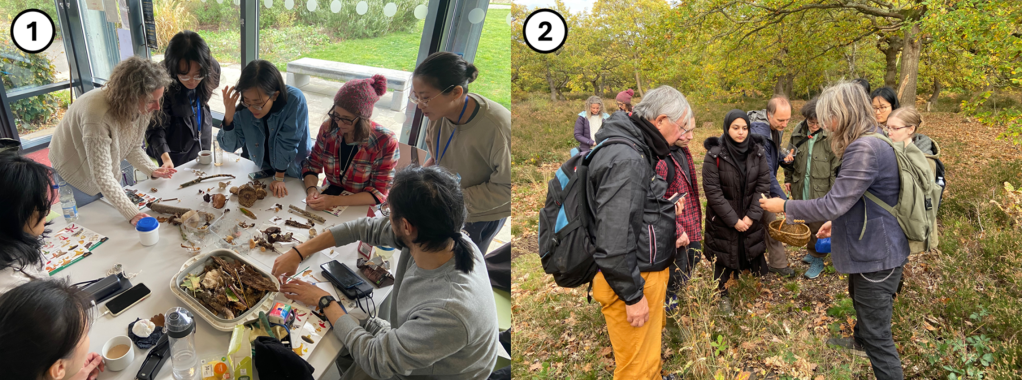
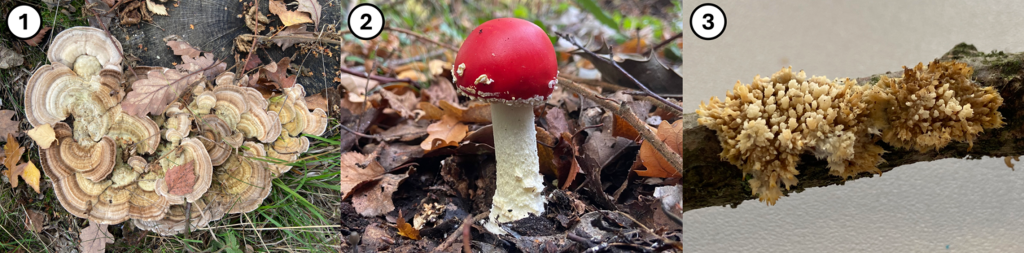
In the morning session, we concentrated on the northern woodland edge, with groups each tackling a 100 × 100 m grid cell. A wide range of species was recorded, including the mushrooms Psathyrella candolleana (Pale Brittlestem), Gymnopus fusipes (Spindle Toughshank), Chlorophyllum rhacodes (Shaggy Parasol) and Daldinia concentrica (King Alfred’s Cakes). Other finds included the crust fungus Basidioradulum radula (Toothed Crust), the sulphur-scented Tricholoma sulphureum and the tiny pink lichenicolous fungus Iliosporiopsis christiansenii on the lichen Physcia adscendens.
In the afternoon the group moved to the small heathland in the south of Lesnes Abbey Woods, one of the few remaining heathland fragments in Greater London and an important refuge for specialist species. Highlights included a striking patch of Trametes betulina (Birch Mazegill) growing – intriguingly – from an English Oak Quercus robur stump, several fine specimens of Amanita muscaria (Fly Agaric), the jelly-like Phaeotremella foliacea (Leafy Brain) and the maroon mushroom Cortinarius decipiens. The latter is particularly uncommonly recorded; Lesnes Abbey Woods is only the second known London site for the species on iRecord. The heath was also productive for Russula (Brittlegills), with three species identified by Mark Spencer: R. ionochlora, R. betularum and R. velenovskyi.
Project Achievements
Details of our overall achievements and findings coming here soon…
This series of events is a collaboration between the Biological Recording Company and the London Borough of Bexley commissioned as part of the Lesnes 500 project funded by the National Lottery Heritage Fund..
Biological Recording Projects
At the Biological Recording Company, we specialise in planning and delivering projects centred around recording wildlife and training naturalists.
- London Recording Projects involve the delivery of events from our Field Recorder Day, Invertebrate Study Day, Earthworm Sampling Day and Training Course programmes. Examples include:
- Site-based projects, such as Wild Tolworth, Ealing Beaver Project and Lesnes 500.
- Borough-based projects, such as our Southwark and Barnet projects.
- Earthworm Projects range from identification training and earthworm surveys to research and consultation. Example include:
- Engagement-focused projects, such as delivering earthworm recorder training in Northern Ireland and working with farmers in the Chilterns.
- Research-focused projects, such as looking at the impact of hay meadow restoration on earthworm communities, assessing the effectiveness of regenerative farming practices and investigating the use of AI in earthworm identification.
- National Biological Recording Projects entail putting our expertise to use with helping other organisations improve the biological recording processes and reach new audiences.
- Training projects include developing online training for Lepidoptera verifiers and producing guidance on the use of Record Cleaner and iRecord.
- Consultation projects include reviewing the pay of natural history tutors and working with the British Mycological Society to improve fungus record quality and data flow.
 Biological Recording