Joss Carr recounts the Plant Gall Field Recorder Day held at Lesnes Abbey Woods on Saturday 20th September 2025. We also share guidance recording plant galls and details of similar upcoming events.
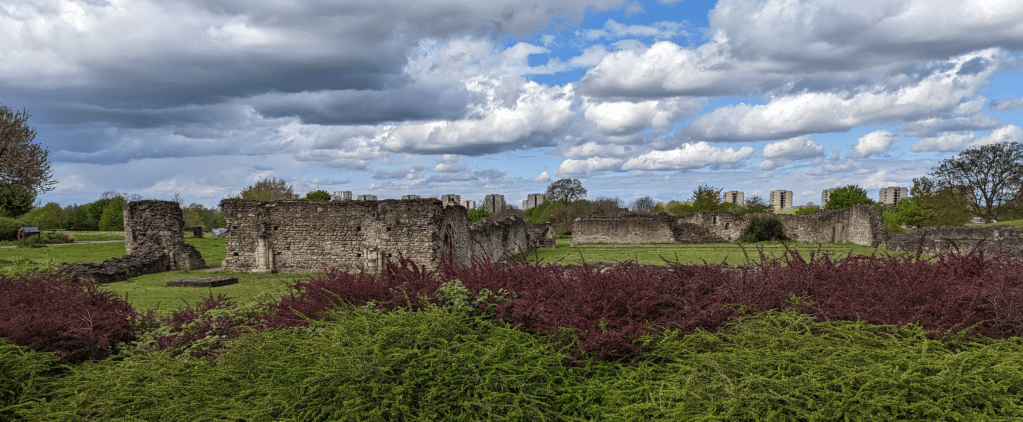
Lesnes Abbey Woods is a rather special place. Situated in the southeast London borough of Bexley, the site makes up a whopping 88 hectares of ancient woodland, park, heathland and grassland. Two of these habitats – ancient woodland and heathland – are very scarce in Greater London. The site therefore supports populations of some quite uncommon species of plants, fungi and insects. At the Biological Recording Company we are big fans of Lesnes – we’ve been running events here since we started in 2023. A mild autumnal day in September this year brought us back to the site to focus on recording a novel group of organisms: plant galls.
Plant galls are funny things. They are abnormal growths of plant tissue caused by the invasion of another organism – a wasp, a fly, a mite, a fungus or a bacterium, for example – within the plant tissue. Galls typically form on leaves, stems, roots, or flowers and come in an astonishing variety of shapes, sizes and colours. The structure itself forms due to the plant’s response to irritation or chemical signals from the invading organism. Galls provide food and shelter for the invading organism inside and, while they may look unusual, are generally not harmful to the overall health of the plant.
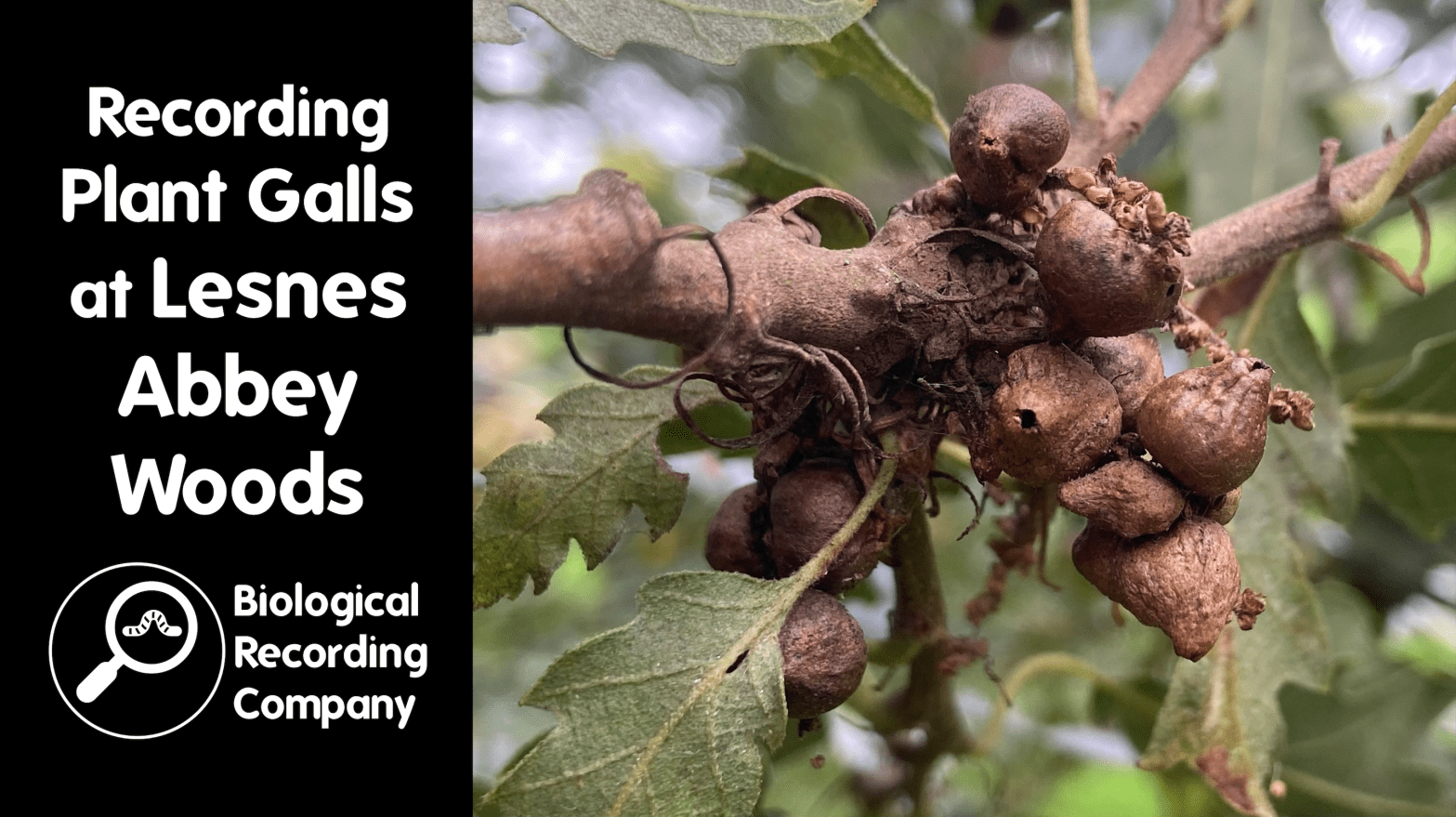
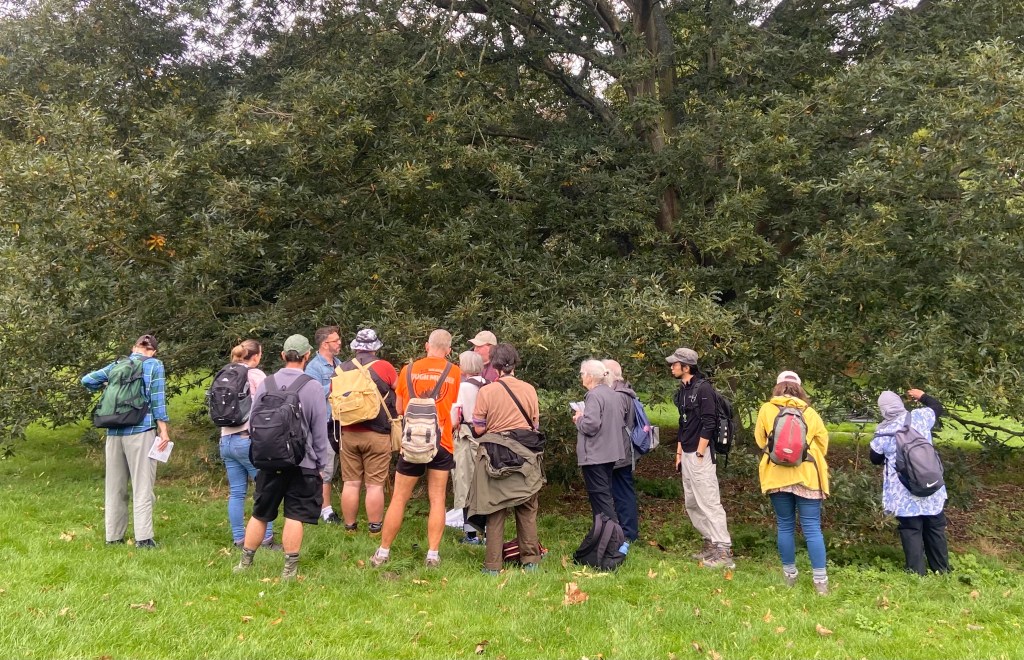
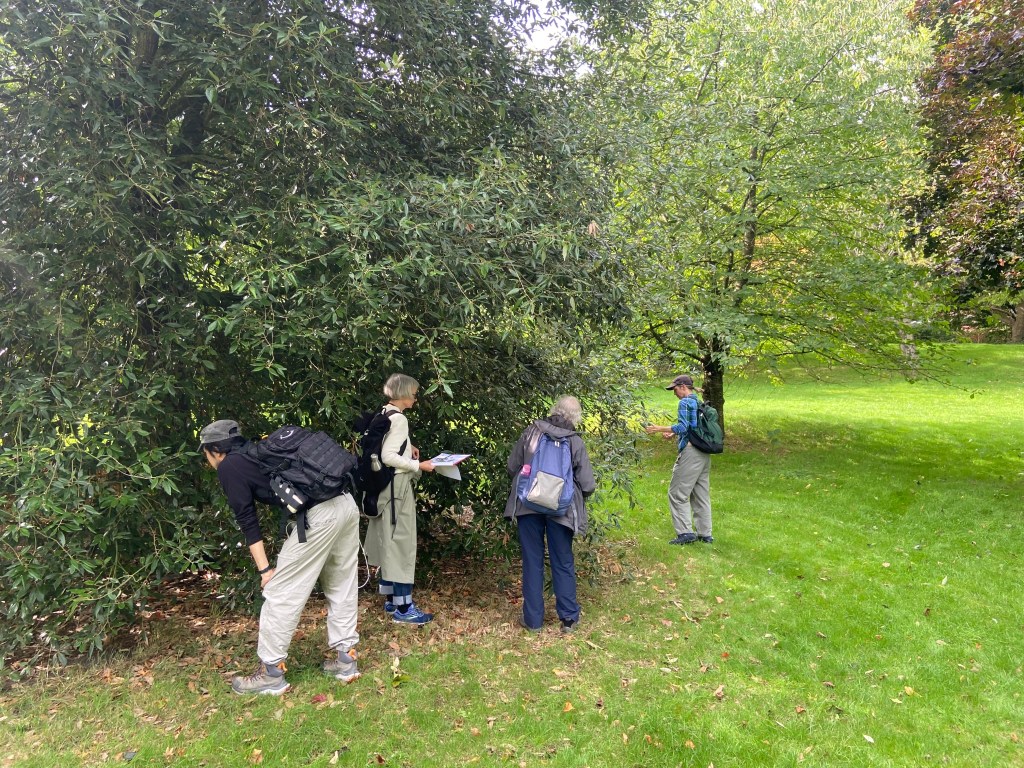
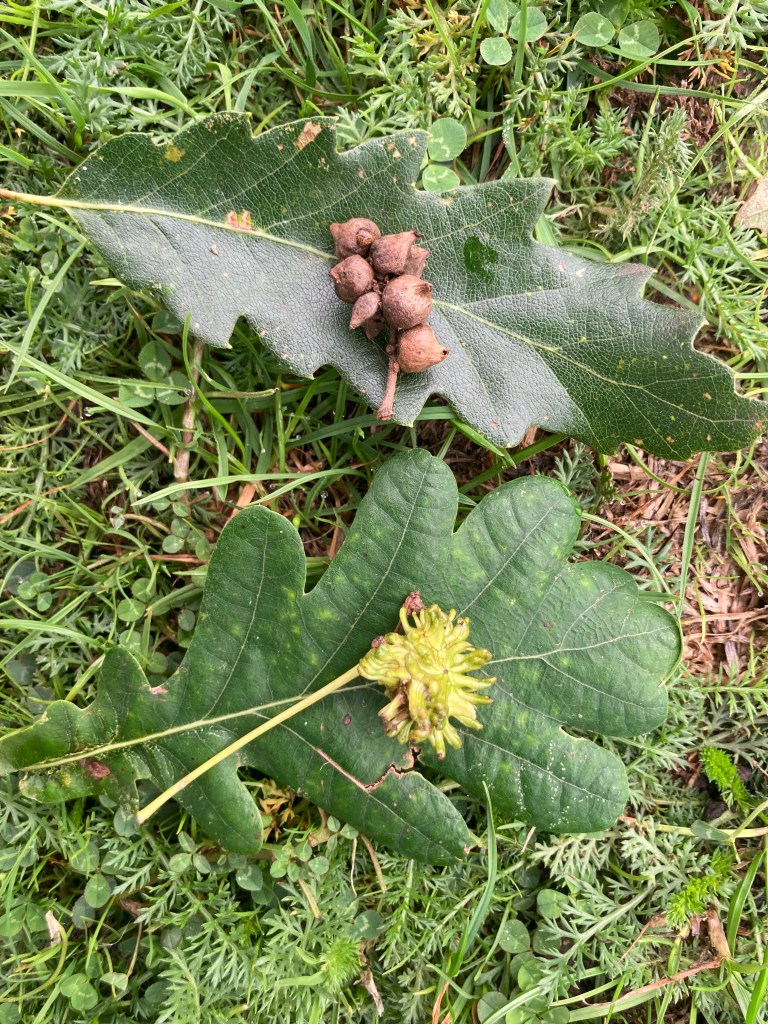
Easily the best place to look for galls is on oak trees – around 50 different gall-causing species are known from oaks in the UK. It is convenient, therefore, that Lesnes Abbey Woods is home to rather a lot of oaks. Our enthusiastic group of 17 started the day at a particular impressive Turkey Oak (Quercus cerris) near the Lesnes Abbey lodge. Under the experienced guidance of LNHS Plant Gall recorder Tommy Root – our specialist for the day – we identified several galls caused on this one tree, including the galls of Aceria cerrea and Andricus grossulariae (below).
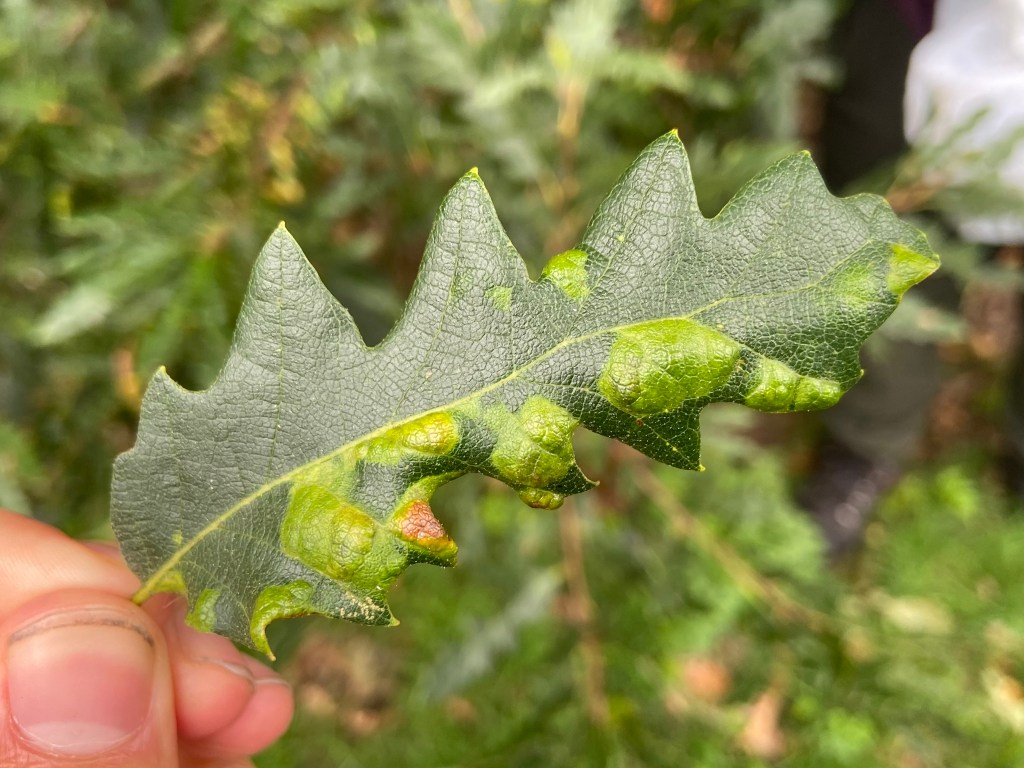
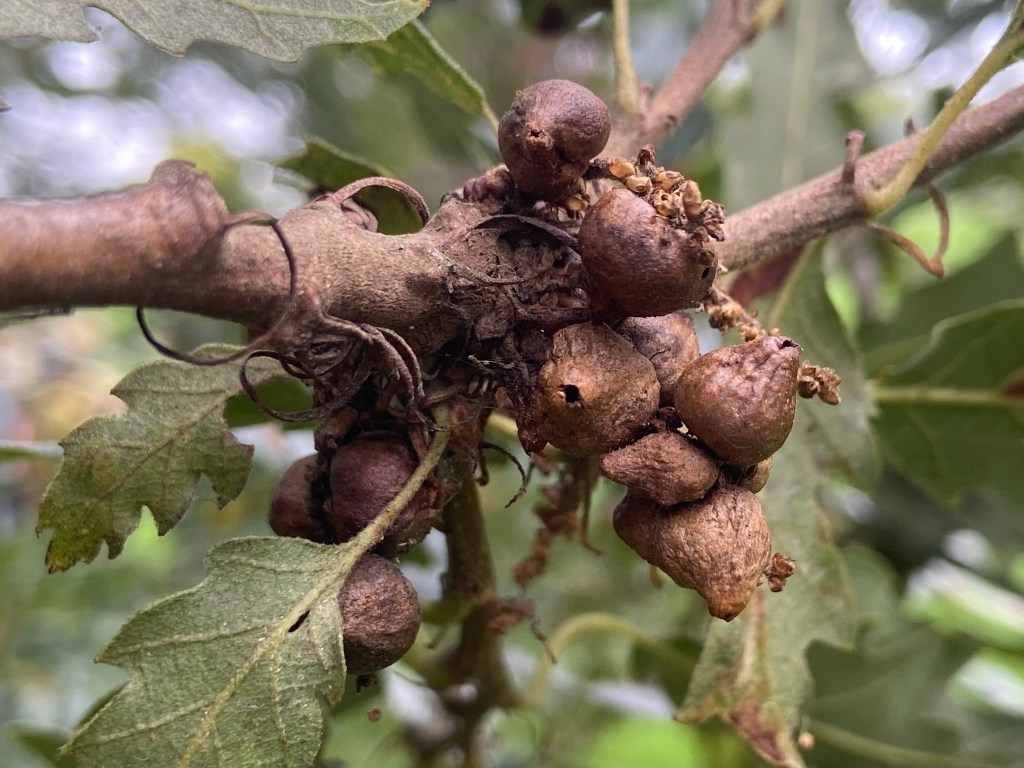
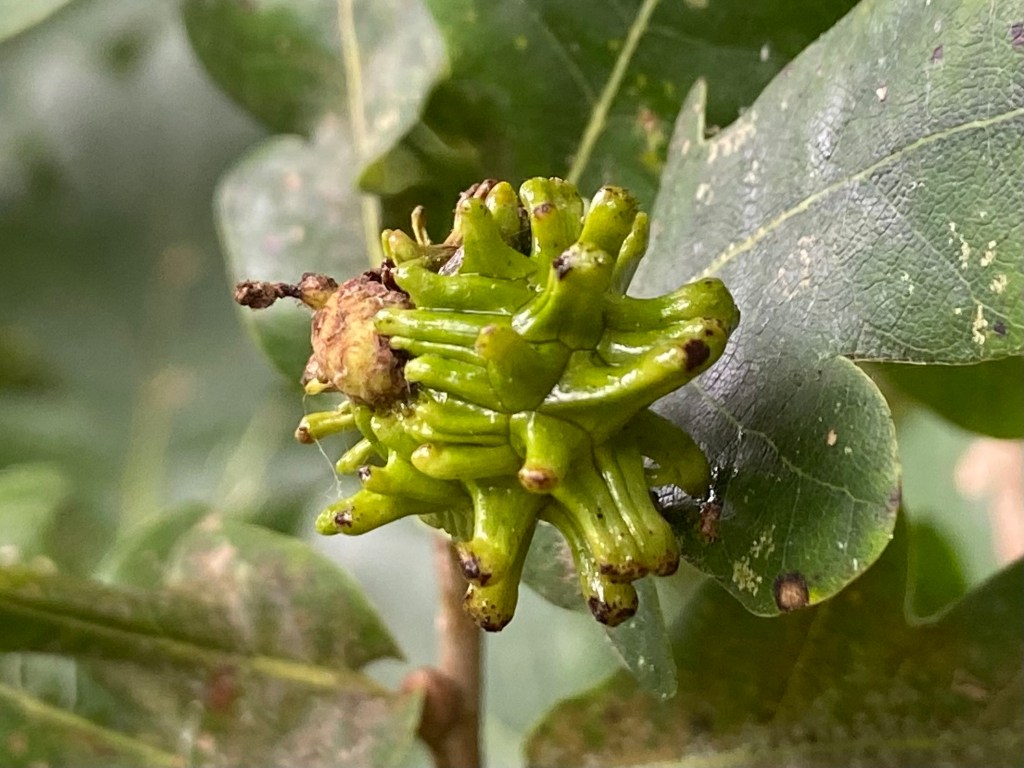
We then made our way about twenty metres north to an English Oak (Quercus robur) and found another few species. On the tree itself we found the bright green and sticky galls of the agamic (asexual) generation of Andricus grossulariae growing on acorn cups. This is the same species responsible for the rounded, nut-like galls on the neighbouring Turkey Oak. We also found a single example of the Ram’s Horn Gall caused by the wasp Andricus aries, and the floor beneath this oak was littered with thousands of fallen woody Knopper Galls (Andricus quercuscalicis).
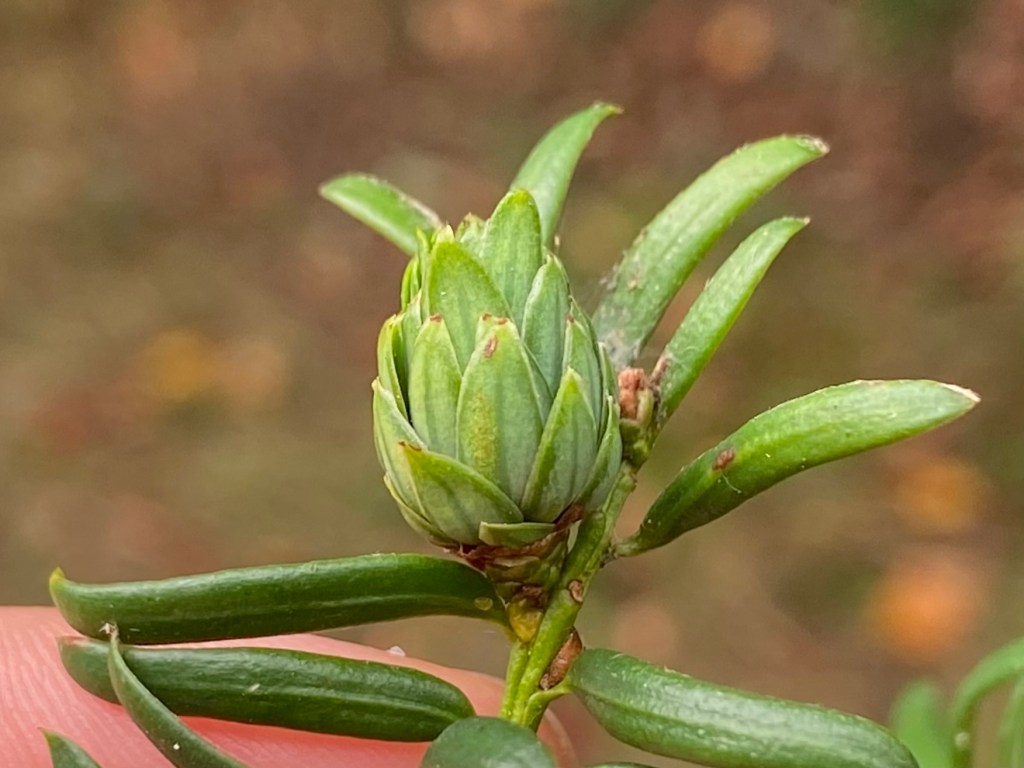
We continued to mill around the parkland area in the morning, checking all of the ornamental trees closely. Additional exciting gall finds here included the artichoke-like galls of the midge Taxomyia taxi on Yew (Taxus baccata), pouch-like swellings caused by the midge Dasineura urticae on Common Nettle (Urtica dioica), and galling caused by the mite Acalitus brevitarsus on the leaves of Italian Alder (Alnus cordata). Though not typically considered galls, several powdery mildews – a group of fungi which form white dusting on plants during autumn – were also spotted, including the uncommonly recorded Golovinomyces bolayi on Prickly Lettuce Lactuca serriola.
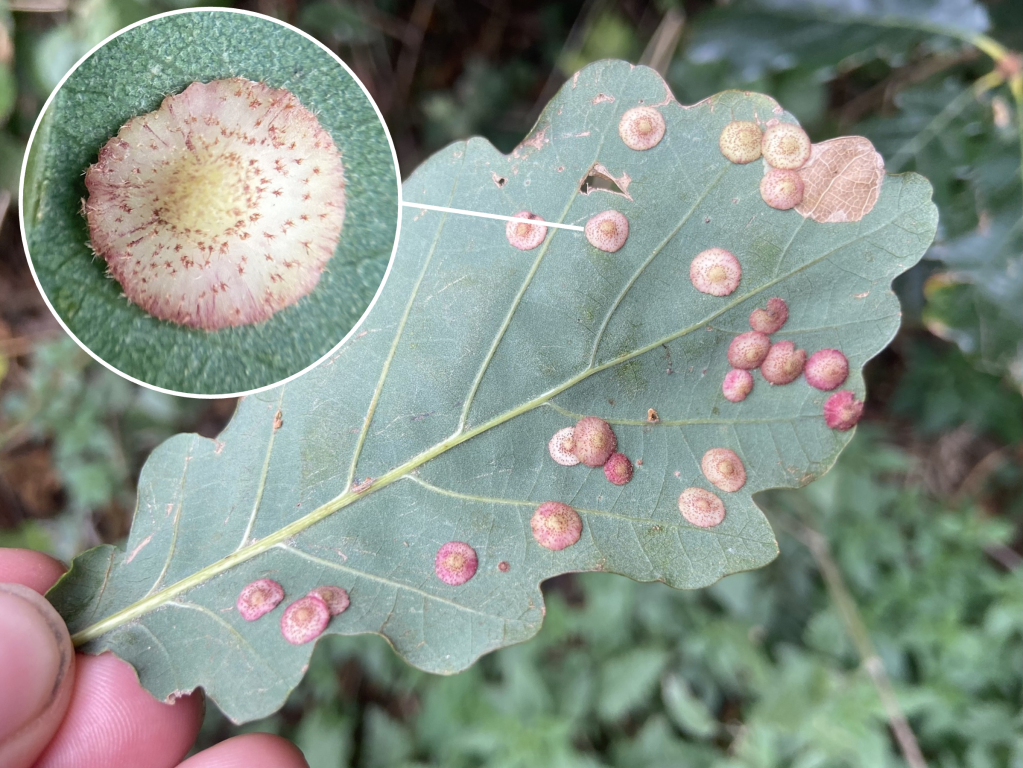
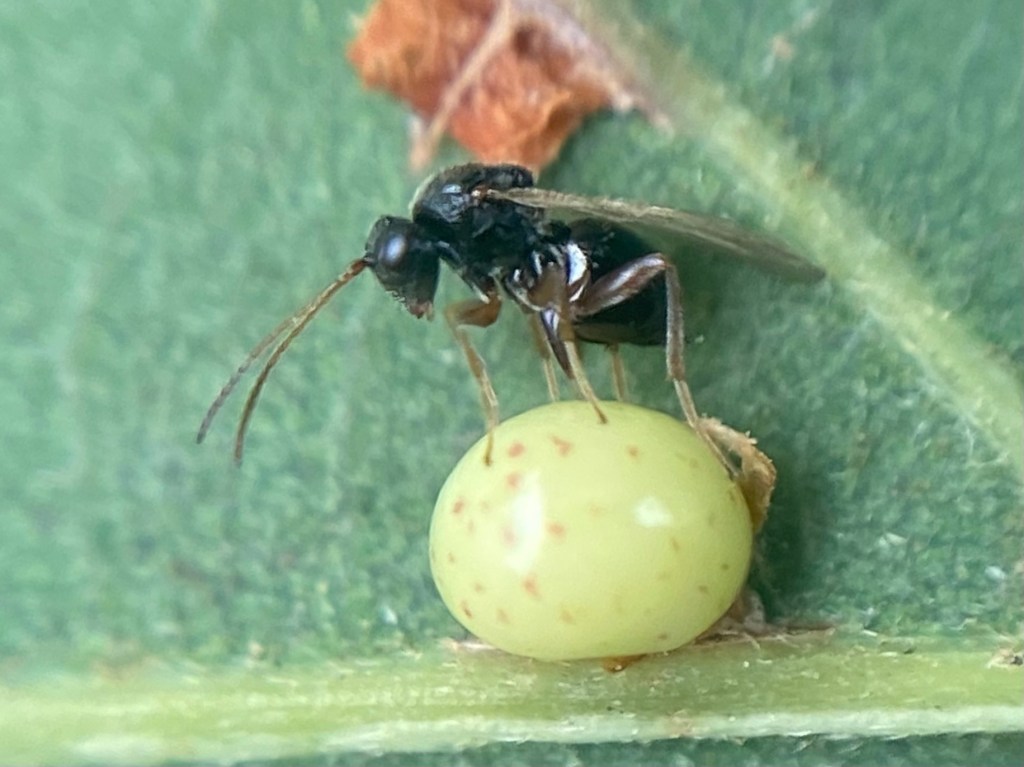
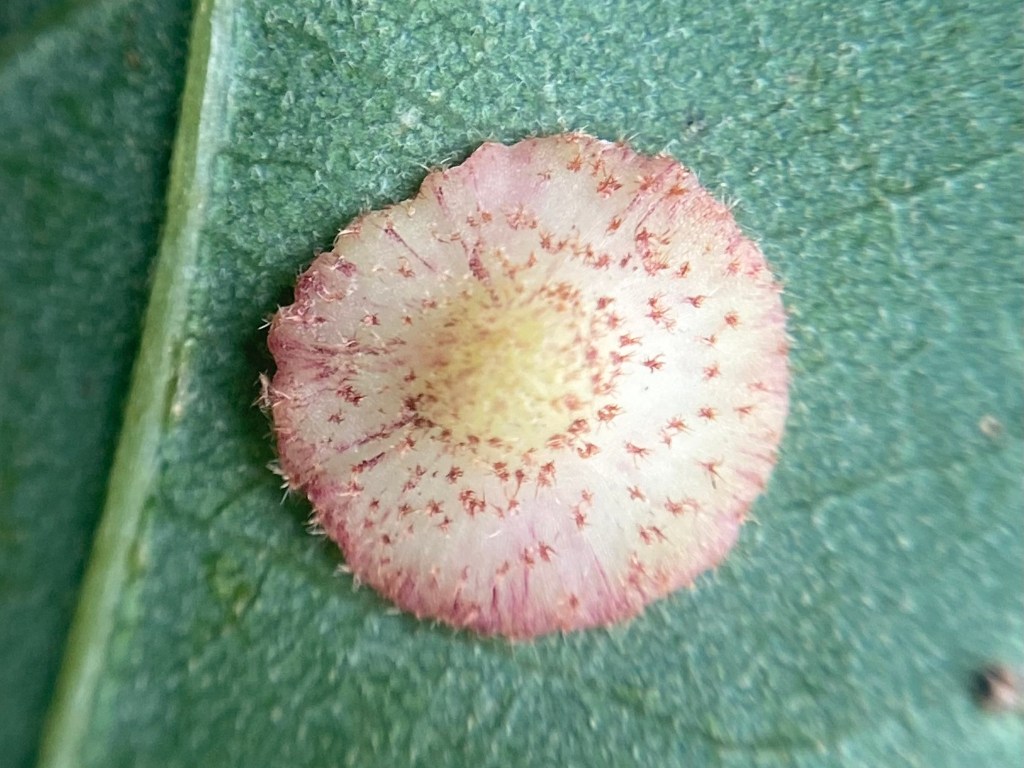
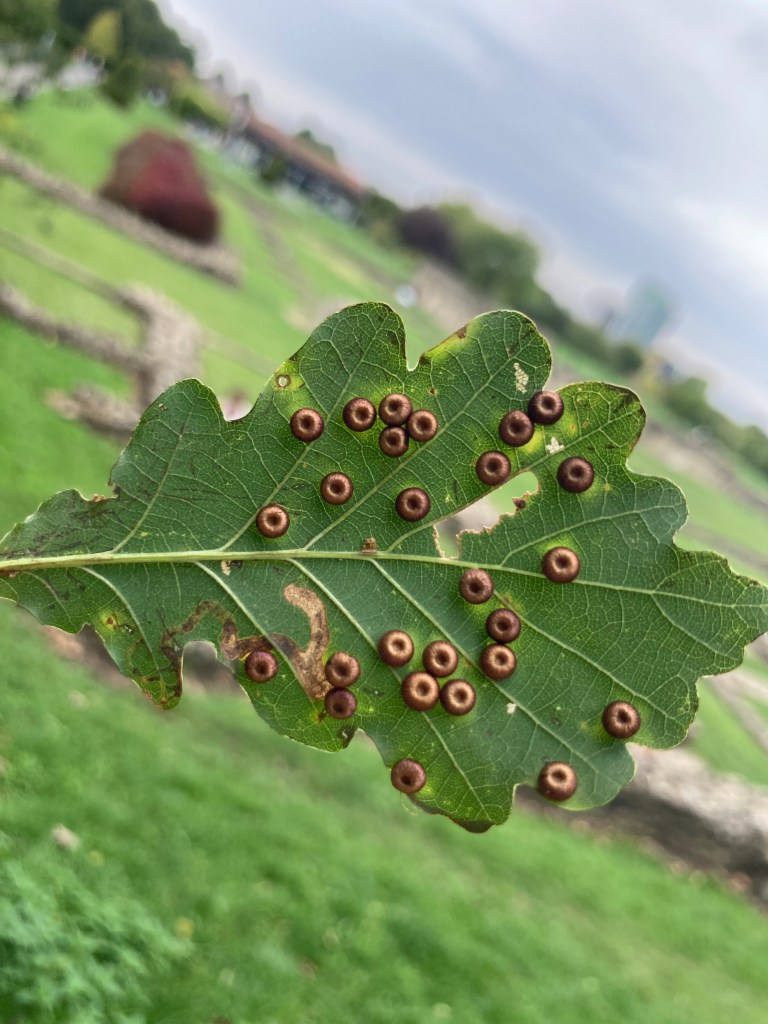
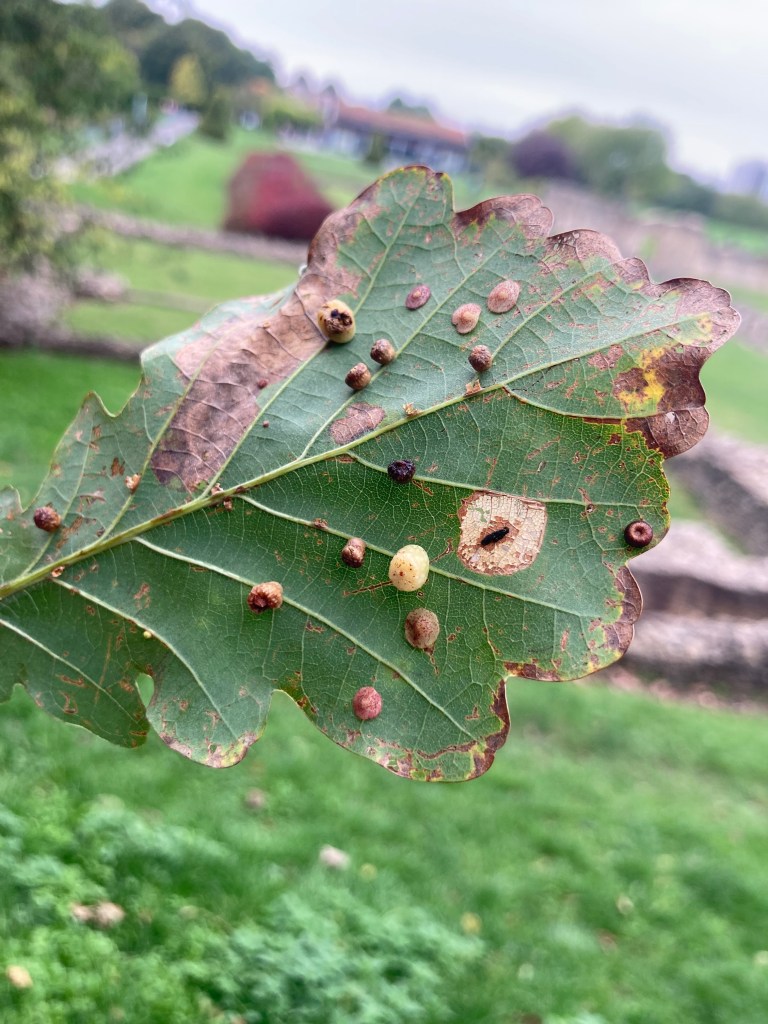
After a productive lunch where we spent time identifying some collected specimens, we were keen for a change of habitat so moved onto the northern margin of the woodland. A particularly good Sessile Oak (Quercus petraea) tree here yielded an additional four galls for the list, all found on the leaf undersides and caused by small wasps in the family Cynipidae: Neuroterus anthracinus, Neuroterus numismalis, Neuroterus quercusbaccarum and Cynips disticha. The former even had the wasp itself sitting on its gall (see below)! We also found that leaves of the shrubby elms along the woodland margin were covered with small pustule galls caused by the mite Aceria campestricola.
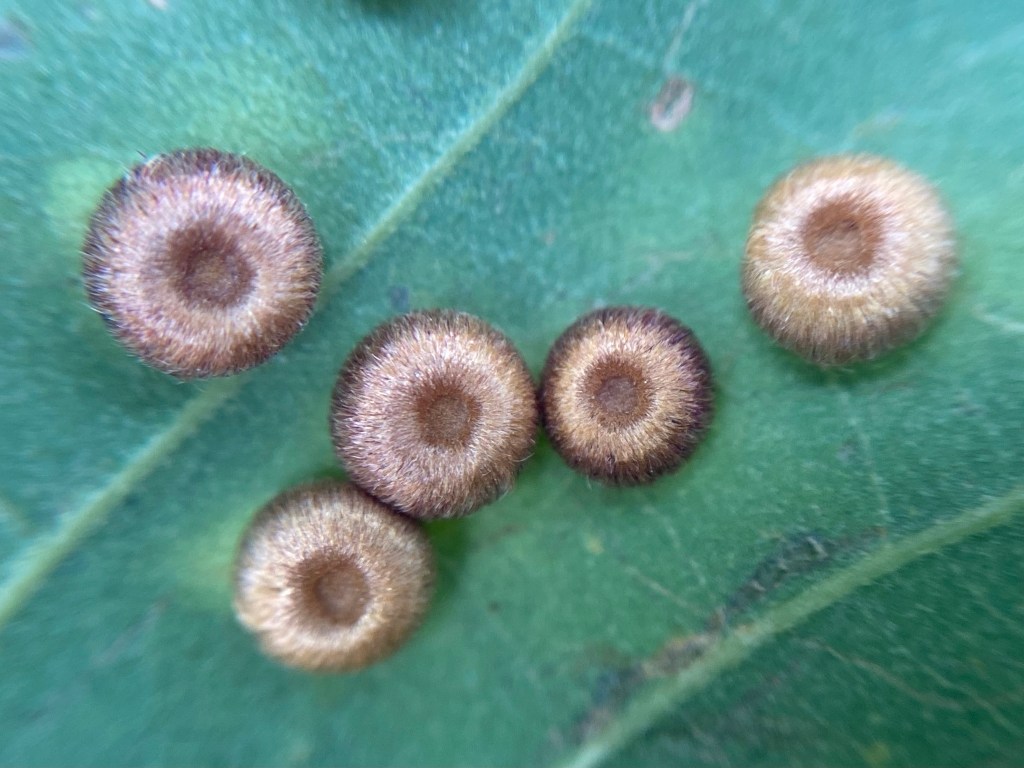
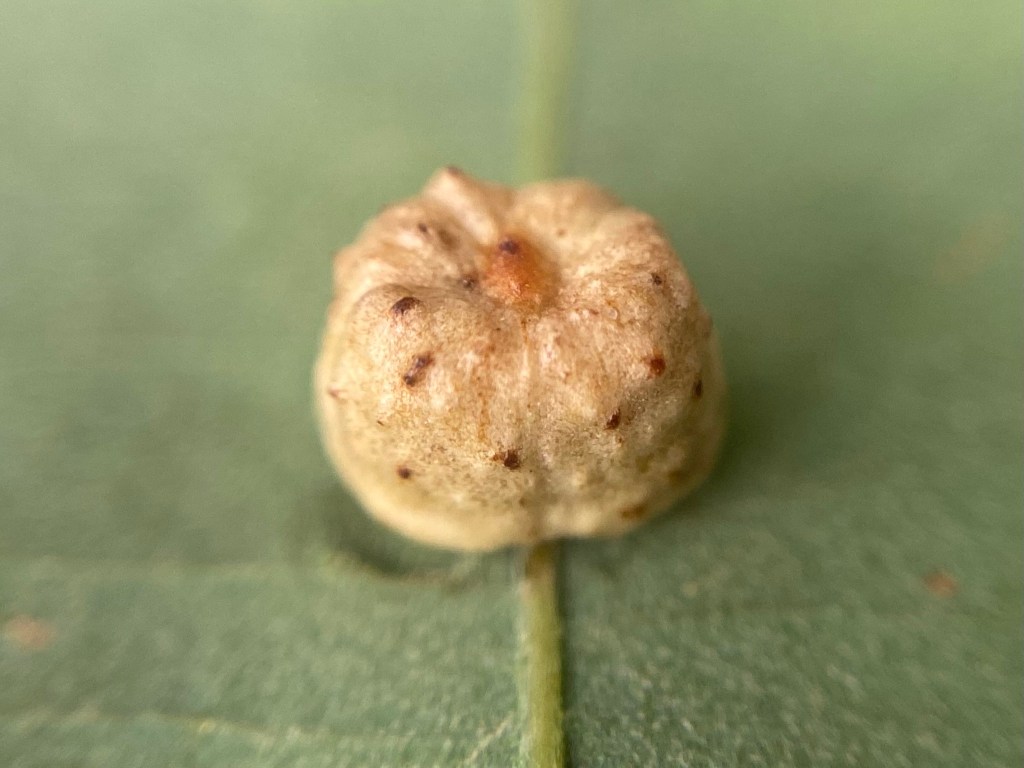
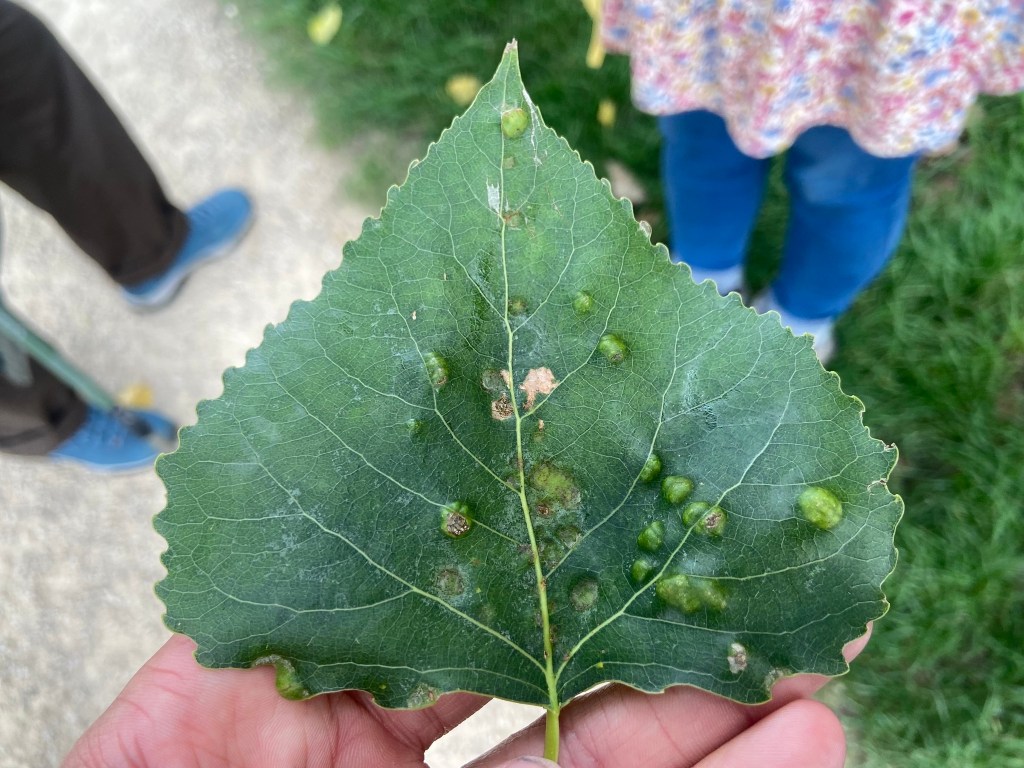
We rounded off the day by splitting up into groups. Some continued along the woodland margin and some ventured into the woodland itself a little way. Additions to the site list from the woodland margin group included the fungus Taphrina populina, which forms galls on the leaves of Black Poplar and its hybrids (Populus sect. Aigeiros), the wasp Ophelimus maskelli, which forms leaf pustule galls on Eucalyptus trees, and the mite Vasates quadripedes, which forms leaf pustules on Silver Maple (Acer saccharinum). The woodland interior group recorded the midge Hartigiola annulipes, which forms ‘lighthouse galls’ on Beech (Fagus sylvatica) and the non-native wasp Dryocosmus kuriphilus, which forms galls on Sweet Chestnut (Castanea sativa) and is a recent arrival in the UK (circa 2015). Seeing D. kuriphilus was particularly fitting as Lesnes Abbey Woods was one of the first UK sites at which the species was found!
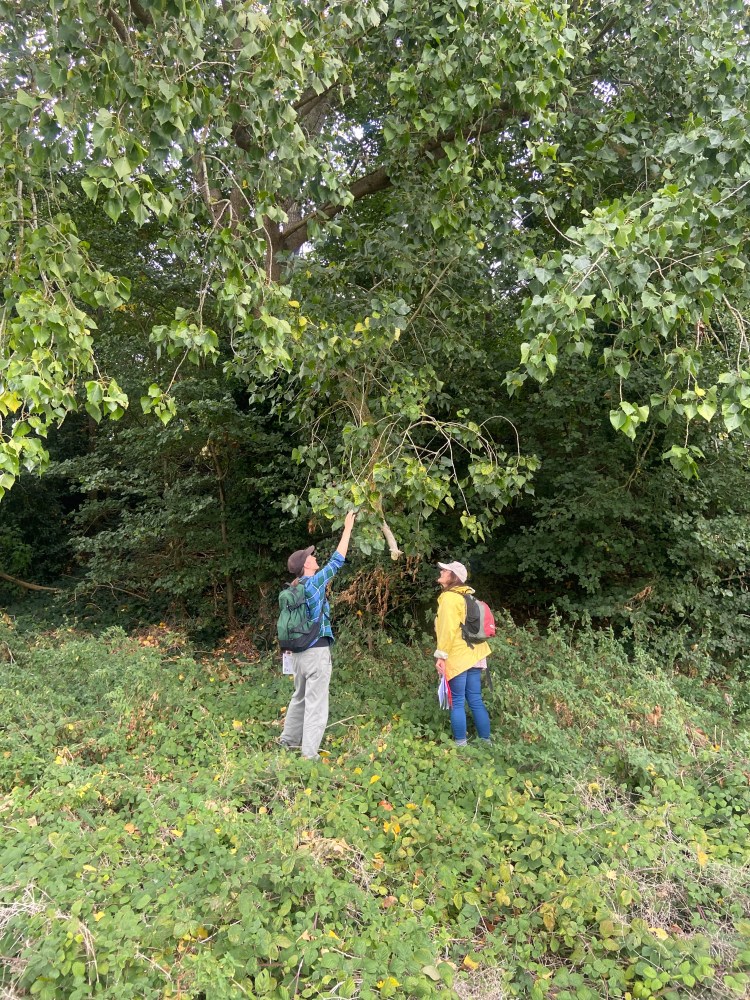
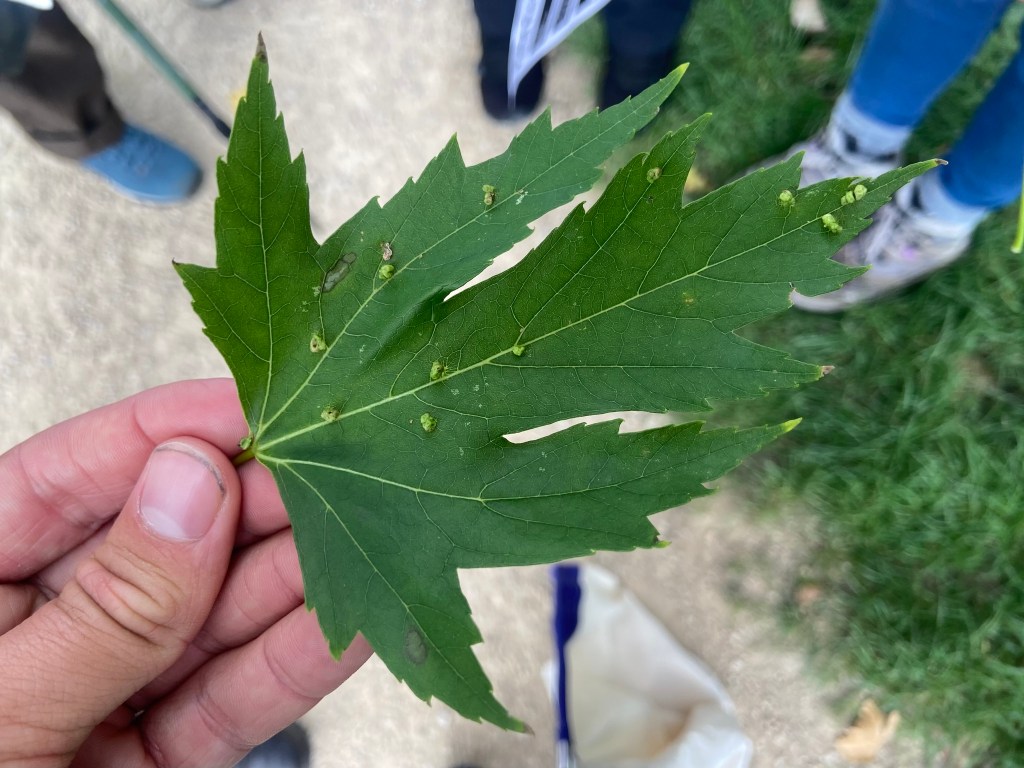
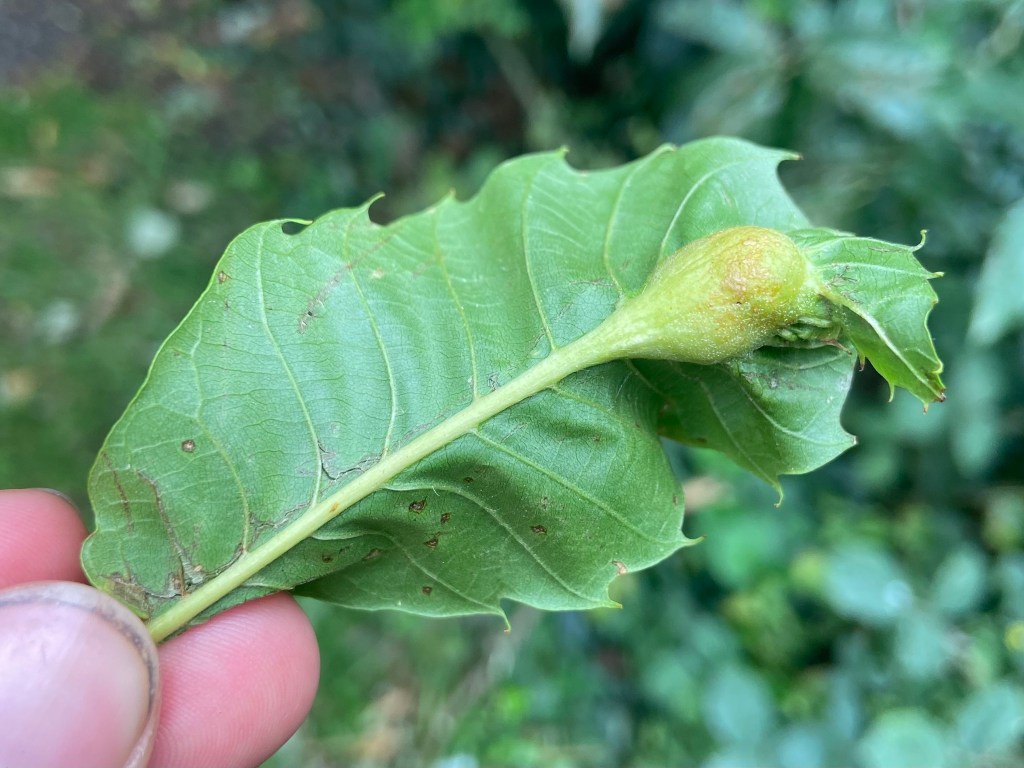
All in all, the day was a resounding success with the group generating an impressive 187 records including 122 records of 44 gall-causing species. Those 44 gall-causing species included 15 mites, 3 fungi, 14 wasps, 4 true bugs and 8 midges. A big thanks to all who attended and we hope you enjoyed hunting for this obscure but fascinating group of organisms with us. Extra special thanks go to Tommy Root – our plant gall specialist – for leading the group and to Ian Holt and the team at Lesnes Abbey Woods for contracting us to run this event. We hope to see you at the next one!
This event was run as a collaboration between the Biological Recording Company and Lesnes Abbey Woods as part of the Lesnes 500 project funded by the National Lottery Heritage Fund.

Field Recorder Days
All of our London Field Recorder Day events are free to attend, and all of the data is collated through iRecord and shared with Greenspace Information for Greater London (GiGL). We work closely with the London Natural History Society and they partner with us on our Field Recorder Day programme.
We’ll be returning to Lesnes Abbey Woods for the following Field Recorder Days in 2026:
- Beetle Field Recorder Day 24 Mar 2026
- Mollusc Field Recorder Day 23 Apr 2026
- General Field Recorder Day 16 May 2026
We’ll also be back out in the field with Tommy for another Plant Gall Field Recorder Day at the Welsh Harp Open Space in 2026:
- Plant Gall Field Recorder Day 19 Sep 2026 at Welsh Harp (Barnet)
Recording Plant Galls
You don’t need to go to Lesnes Abbey Woods to record plant galls. Getting started with recording any group can be intimidating, so we’re here to offer a few tips.
- Get an identification guide: The bible for British plant gall identification is the British Plant Galls AIDGAP from the Field Studies Council, featuring around 300 keys, organised alphabetically by host plant genus. It may also be worth considering the Britain’s Plant Galls WILDGuide, particularly if you prefer photographic guides. Whilst it’s less comprehensive, it features 200 of the most common and conspicous plant galls in good detail with photos.
- Record gall specifics: When recording galls, it is important to also record the host plant (as well as the gall causer) and the generation type. Many gall-inducing insects, particularly oak gall wasps (cynipids), have complex life cycles that alternate between distinct sexual (gamic) and asexual (agamic) generations. Often, each generation produces a gall that is structurally different from the other and may occur on different parts of the same host plant or even different host plant species.
- Take photos: Photos of plant galls are very useful for specialists wishing to confirm that your identification is correct. Plant galls don’t move so they are much easier to photograph than other groups such as mammals and invertebrates
- Submit your records: Like many groups, plant galls are under-recorded – so even records of common plant galls are really useful. You can submit a list of plant galls for a host via iRecord. Don’t forget to include any picture that you’ve taken!
- Join the British Plant Gall Society: Founded in 1985, the Society’s principal aim is to encourage and support the study of plant galls. They welcome new members of all experience levels, and the British Plant Gall Society website is a treasure trove of information (including upcoming events).
 Biological Recording