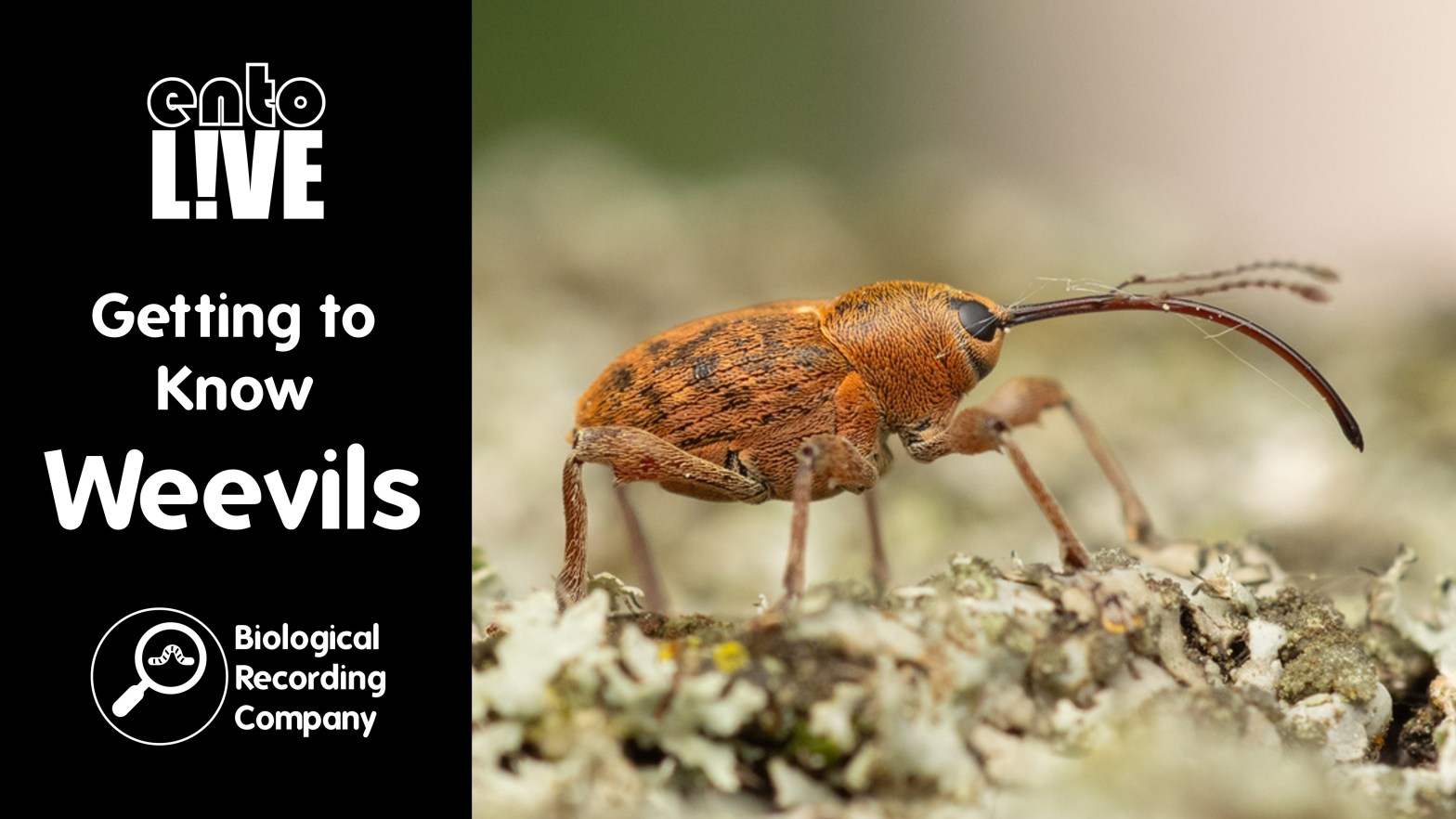
Weevils are one of the UK’s most diverse groups of beetles, with around 550 species currently known to occur here. You will find weevils every time you go and look for insects, but they have a reputation for being difficult to identify. In this talk, Mark introduces the different groups present in the UK, and outlines how you can get to know them better.
Q&A with Mark Gurney
Mark Gurney is one of the organisers of the UK Weevil Recording Scheme and is responsible for the production and maintenance of a range of identification guides for the British species.
1. How can I identify a weevil I have found?
I’ve produced a range of identification guides for the different groups of UK weevils, all of which you can find here: tinyurl.com/weevilguides. My photo albums for UK weevils may also be helpful and can be found here: tinyurl.com/weevilalbums. There is also a Facebook page (not created by me!) where you can pose identification queries: Weevils of Britain. If you have a photo you can add it as a record to iNaturalist or iRecord.
2. What’s the best time of year to look for weevils?
Looking at the group as a whole, the annual peak in diversity, numbers, and activity is around April-May-June. That being said, if you only look during the Spring there are some species you may miss, and many species have population peaks later in the year. Ultimately, there are weevils to be found at any time of year. This even includes during winter as most species live over winter as adults. You have to put in more effort to find weevils during winter, though, as those that are around are less active. Grubbing around beneath vegetation or within grass tussocks is one method that can work well in the colder months, as can sifting leaf litter.
3. What do weevils eat?
As larvae, many weevils feed on a specific group of closely related plants (e.g. one species, genus or family of plants). Knowledge of host plant can therefore be a good clue for identifying the weevil species found. There are, however, some groups of weevils which are more generalist ‘polyphagous’ feeders, such as the broad-nosed weevils (family: Curculionidae; subfamily: Entiminae). Adult weevils may remain on the same plant they fed on as larvae, but they can and do move to other plants. For example, a species which feeds on legumes in summer might move to shrubs during autumn for shelter over the winter.
4. Are there any non-native weevil species in the UK?
Currently we recognise 547 total species of weevil (excluding the bark beetles) as established in the UK. At least 50 of these are non-native. Many of the non-native species are broad-nosed weevils or weevils associated with decaying wood and timber. A lot of new species are coming in through the horticultural trade.
5. How well studied and recorded are weevils?
There is still loads for us to learn and find. Speaking personally, it’s a bad year if I don’t find at least one weevil species new to my county, just by going around looking in the area where I live. The opportunity for anyone to make a difference by contributing is huge. By simply putting your records on iRecord or iNaturalist you will undoubtedly be putting new dots on the maps. There are also likely a fair few new species waiting to be found in the UK, both new arrivals and long-overlooked native species. With climate change and ever-increasing global trade, we are finding new weevil species to the UK every year. There are also some gaps regarding feeding preferences, i.e., there are some species for which we do not currently know the plants the weevil feeds on, so opportunity to get involved there too.
Further Info
- Mark Gurney’s weevil identification guides: tinyurl.com/weevilguides
- Mark Gurney’s weevil photo albums: tinyurl.com/weevilalbums
- Weevils of Britain Facebook group: https://www.facebook.com/groups/142476362952752/
entoLIVE
entoLIVE webinars feature guest invertebrate researchers delving into their own invertebrate research. All events are free to attend and are suitable for adults of all abilities – a passion for invertebrates is all that’s required!
- Donate to entoLIVE: https://www.gofundme.com/f/entolive-2025
- Upcoming entoLIVE webinars: https://www.eventbrite.com/cc/entolive-webinars-74679
- entoLIVE blog: https://biologicalrecording.co.uk/category/entolive-blog/
- entoLIVE on YouTube: https://youtube.com/playlist?list=PLuEBNUcfMmE95Re19nMKQ3iX8ZFRFgUAg&feature=shared
entoLIVE is delivered by the Biological Recording Company in partnership with the British Entomological & Natural History Society, Royal Entomological Society and Amateur Entomologists’ Society, with support from Buglife, Field Studies Council and National Biodiversity Network Trust.
The entoLIVE programme is delivered by Biological Recording Company and receives sponsorship from the following organisations:
- British Entomological & Natural History Society
- Royal Entomological Society
- Amateur Entomogists’ Society
Learn more about British wildlife

 Biological Recording