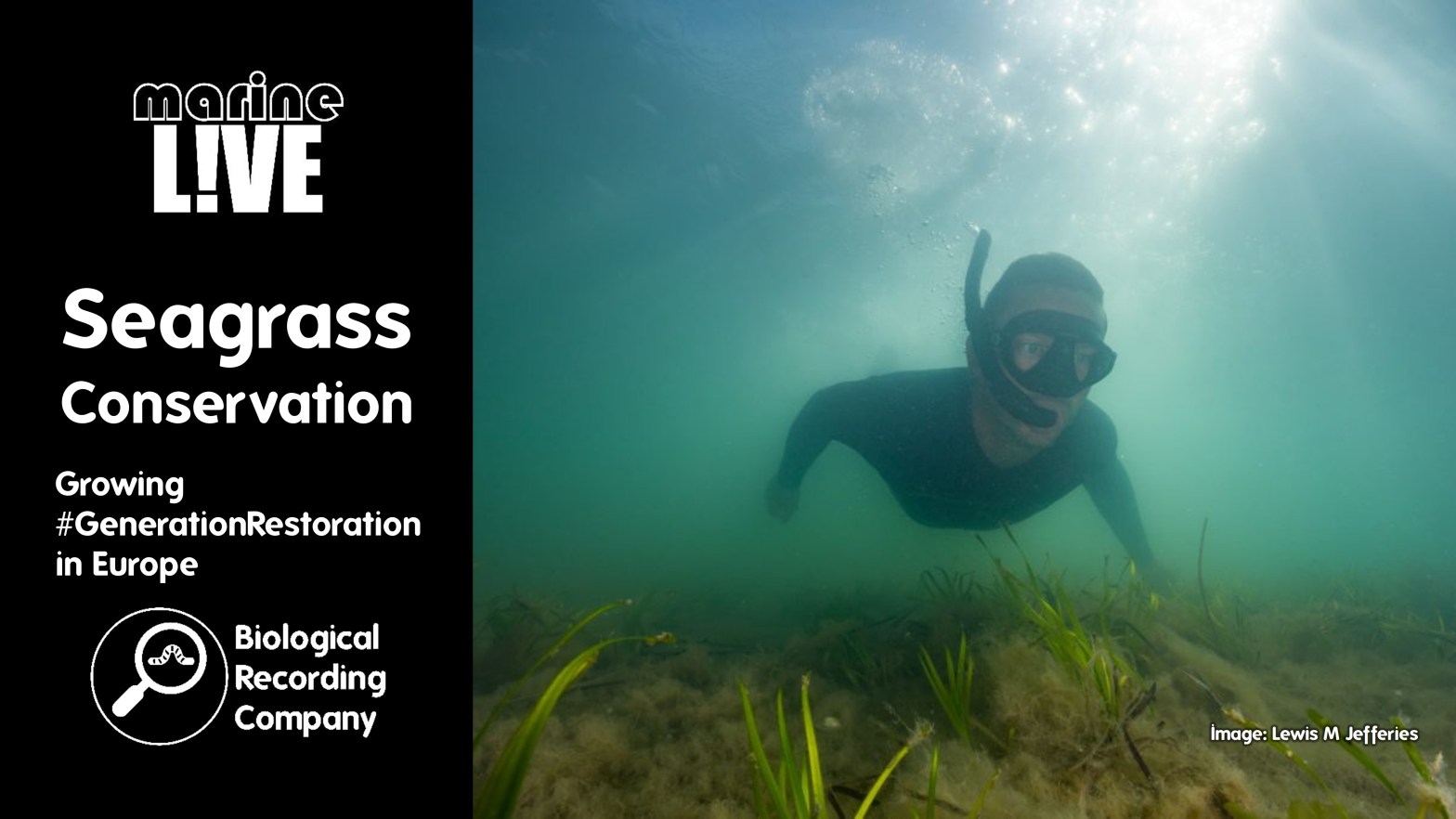
Seagrass conservation plays a critical role in maintaining planetary health. This presentation explores this role, before turning to how the recently founded European Seagrass Restoration Alliance (ESRA) is seeking to overcome existing barriers to the conservation, restoration and re-establishment of European seagrass meadows by providing a platform for the ESRA community to collaborate and engage in knowledge exchange. ESRA was founded to meet noth the challenges and opportunities presented by UN Decade on Ecosystem Restoration, and the EU Nature Restoration Law. In order to deliver on current marine restoration ambitions, unprecedented transnational collaboration, and the rapid development and deployment of novel innovations will be required.
Q&A with Dr Richard Lilley
Dr Richard Lilley started his research career studying sustainable supply chain management in small-scale capture fisheries. Here, seafood supply chains – on which local food security depends – are reliant on healthy natural coral reefs, seagrass meadows and mangrove forests. Becoming fascinated by the critical importance of seagrass meadows in particular, as both havens for biodiversity and nursery grounds for many commercially important fish species, Richard first cofounded a UK NGO called Project Seagrass (2013), before turning his attention to scaling up seagrass restoration in Europe (2024).
1. What is the minimum salinity for seagrass?
The answer depends on how you define the term seagrass. Different definitions mean that some scientists recognise around 60 species of seagrass worldwide whereas others recognise 72. Following the strict definition, seagrasses are flowering plant species which complete their entire reproductive cycle within the marine environment.
However, some scientists also include plant species which are not fully marine and are found in more brackish environments, e.g., estuaries. I explained in the talk that in Europe we generally recognise four species of seagrass (Posidonia oceanica, Cymodocea nodosa, Zostera marina and Zotera noltii). If you choose to follow a more expansive definition of seagrass then you could add a few extra species to that list, e.g. Ruppia maritima. These species are those that tend to be found in the freshwater-saltwater transition zone, places like estuaries or saltmarshes.
2. How are seagrass meadows designated for protection?
Legal protection for seagrass meadows varies by country. Sometimes it’s automatic. For example, in Scotland, all seagrass meadows are automatically protected as ‘Priority Marine Features’. However, for the meadow to qualify as a ‘feature’ it needs to cover an area of at least 5 metres by 5 metres in area – it can’t just be a single transient plant. Other countries have different laws. And, often the process of designation is a frustrating one. One unique challenge with designating seagrass meadows for areal protection is that some meadows move slowly over time due to the dynamism of the underlying sediment. Thus, the edges of a meadow may shift, shrink or expand over a span of years. This shifting process has been recognised for some of the Zostera noltii and Zostera marina meadows in British waters. However, it is less of a problem in the Mediterranean with Posidonia oceanica seagrass meadows because that species is very robust, slow-growing and long-lived, hence Posidonia oceanica meadows tend to have clear and relatively fixed edges.
3. What factors determine which seagrass species grow where?
It depends on many things. On a local scale, the most important factor is probably light availability, as regulated by water clarity, which is in turn determined by the amount of sediment in the water column. Posidonia oceanica can be found up to depths of 50 metres in the clearest waters of the Mediterranean, in contrast Zostera noltii and Zostera marina might only be found down to around 1–2 metres in the turbid mouths of major European estuaries or even in the intertidal zone. At a broader scale, tidal range is another key factor. The Mediterranean famously only has a tiny tidal range, hence in this environment there is relatively little physical stress imposed on seagrasses by the movement of water. This contrasts with, for example, the Atlantic, where the tidal range is much greater and therefore there is constant turbulence in the water to which seagrasses must adapt. Tidal differences and the availability of light for photosynthesis are key factor as to why the Mediterranean features a different dominant seagrass species to the coasts of the British Isles.
4. Is climate change negatively affecting the health of European seagrass meadows?
Yes, unfortunately, anthropogenic climate change is clearly impacting our seagrass meadows. That is because seagrass meadow persistence at a given site is dependent on the ambient water temperature. At some seagrass sites which are at the southern edge of a seagrass species ranges, we are seeing notable shifts in the seagrass community composition as warming waters begin to favour certain species over others. In Étang de Berre in France, for example, the dominant species prior to the 1960s was Zostera marina. This lagoon is right at the southern edge of Zostera marina’s global range, so as the climate has warmed, Zostera marina has notably declined at the site and has been replaced by the more warmth-tolerant Zostera noltii. Conversations are now being had, from a restoration perspective, about whether restoring Zostera marina beds is a worthwhile venture here. In a few decades, might the waters be simply too warm in summer for it to survive?
5. Has active restoration of seagrass meadows been successful so far?
It depends on how you qualify success. In terms of ecological success – i.e. has the restoration worked? – the success rate is variable. Some projects see excellent outcomes, e.g. >90% survival of seedlings after the first year of planting. Other projects have had very little success so far. It is worth nothing though that many of these projects are still in their infancy. What is consistently exciting is that success by other metrics, particularly in terms of civic engagement and public involvement with restoration and marine stewardship, seems to be getting better all the time. More and more people are being connected with ecosystem restoration every year. At least in the early years of these projects, this is arguably a more important goal. Restoration is always experimental in nature, and some failures should be expected along the journey. We need to be better embracing uncertainty in marine restoration which means shifting from fixed goals to more flexible outcomes. In my opinion the path to eventual long-term success is facilitated by the engagement of a community of dedicated restoration practitioners and we are excited that this community is steadily growing.
Literature References
- Unsworth et al. (2022) ‘The planetary role of seagrass conservation’: https://www.science.org/doi/10.1126/science.abq6923
- Unsworth et al. (2018) ‘Seagrass meadows support global fisheries production’: https://conbio.onlinelibrary.wiley.com/doi/10.1111/conl.12566
- Unsworth and Cullen (2010) ‘Recognising the necessity for Indo-Pacific seagrass conservation’: https://conbio.onlinelibrary.wiley.com/doi/10.1111/conl.12566
- Preston et al. (2025) ‘Seascape connectivity: evidence, knowledge gaps and implications for temperate coastal ecosystem restoration practice and policy’: https://www.nature.com/articles/s44183-025-00128-3
- Wedding et al. (2025) ‘Five ways seascape ecology can help to achieve marine restoration goals’: https://research.rug.nl/en/publications/five-ways-seascape-ecology-can-help-to-achieve-marine-restoration
Further Info
- The Seagrass Consortium: https://www.seagrassconsortium.org/
- European Seagrass Restoration Alliance (ESRA): https://esra-europe.eu/
- Project Seagrass: https://www.projectseagrass.org/
- The Sea Rangers: https://searangers.org/
- Seagrass Spotter: https://seagrassspotter.org/
- Seagrass Restorer: https://seagrassrestorer.org/
- Society for Ecological Restoration Marine Restoration Working Group: https://ser-europe.org/mrwg/
- BiodivRestore Knowledge Hub: https://www.biodiversa.eu/engagement/biodivrestore-knowledge-hub/
- The unexpected, underwater plant fighting climate change (TED Talk): https://www.ted.com/talks/carlos_m_duarte_the_unexpected_underwater_plant_fighting_climate_change
- From Roots to Recovery: Welsh Capital to host symposium Integrating Communities, Science, and Action for UK Seagrass: https://www.projectseagrass.org/blogs/conferences/from-roots-to-recovery-welsh-capital-to-host-symposium-integrating-communities-science-and-action-for-uk-seagrass/
- Etang de Berre website: https://etangdeberre.org/
- Lewis Michael Jefferies photography: https://lewismjefferies.com/
- The Ocean Agency, Ocean Image Bank: https://www.theoceanagency.org/ocean-image-bank
marineLIVE
marineLIVE webinars feature guest marine biologists talking about their research into the various organisms that inhabit our seas and oceans, and the threats that they face. All events are free to attend and are suitable for adults of all abilities – a passion for marine life is all that’s required!
- Upcoming marineLIVE webinars: https://www.eventbrite.co.uk/cc/marinelive-webinars-3182319
- Donate to marineLIVE: https://gofund.me/fe084e0f
- marineLIVE blog: https://biologicalrecording.co.uk/category/marinelive-blog/
- marineLIVE on YouTube: https://youtube.com/playlist?list=PLuEBNUcfMmE-t2dzcoX59iR41WnEf21fg&feature=shared
marineLIVE is delivered by the Biological Recording Company with funding from the British Ecological Society.
- Explore upcoming events and training opportunities from the Biological Recording Company: https://www.eventbrite.co.uk/o/the-biological-recording-company-35982868173
- Check out the British Ecological Society website for more information on membership, events, publications and special interest groups: https://www.britishecologicalsociety.org/
Learn more about British wildlife

 Biological Recording