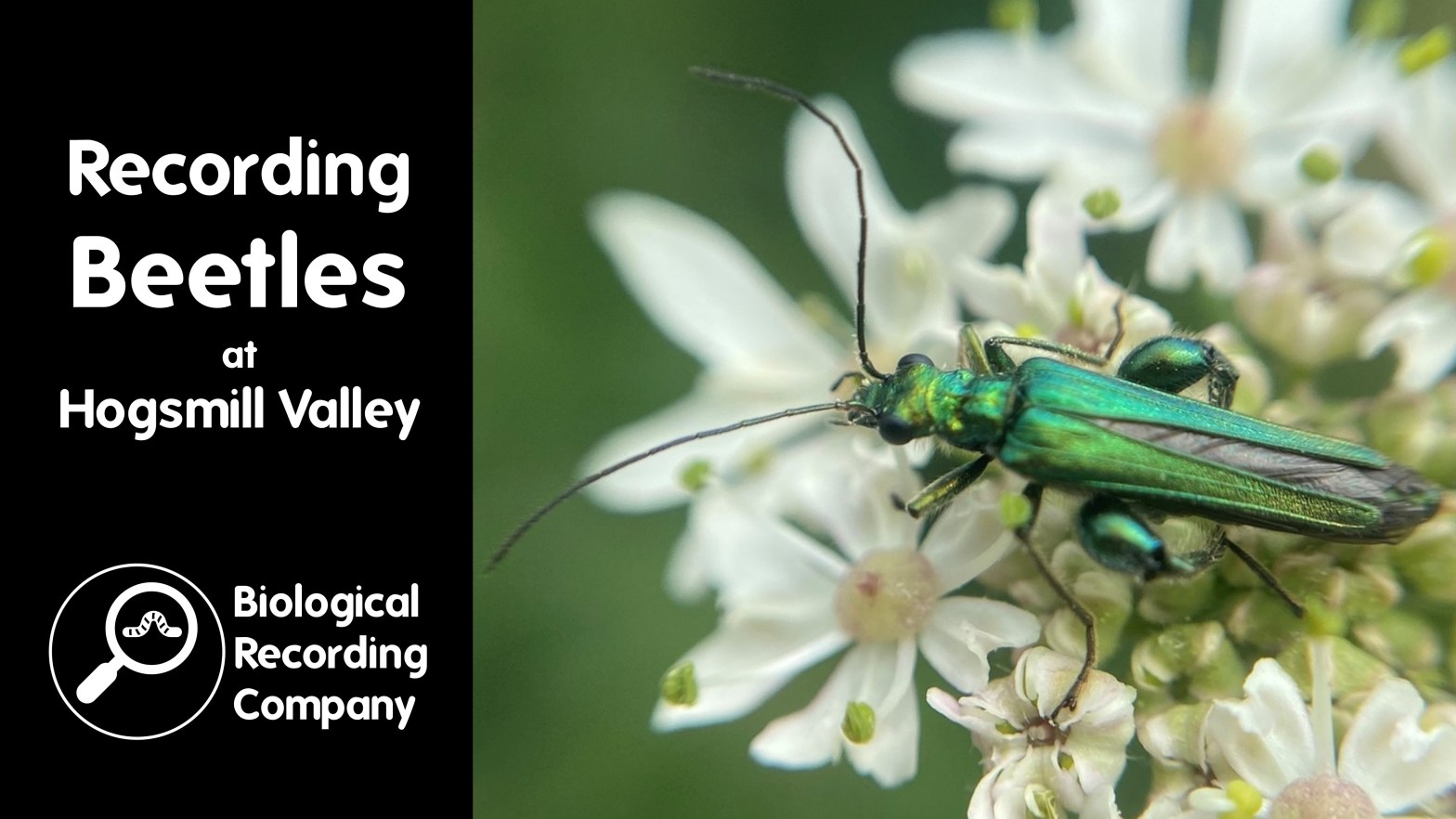

Blog post by Joss Carr
This article recounts the Beetle Field Recorder Day held at Hogsmill Valley on Wednesday 4th June.
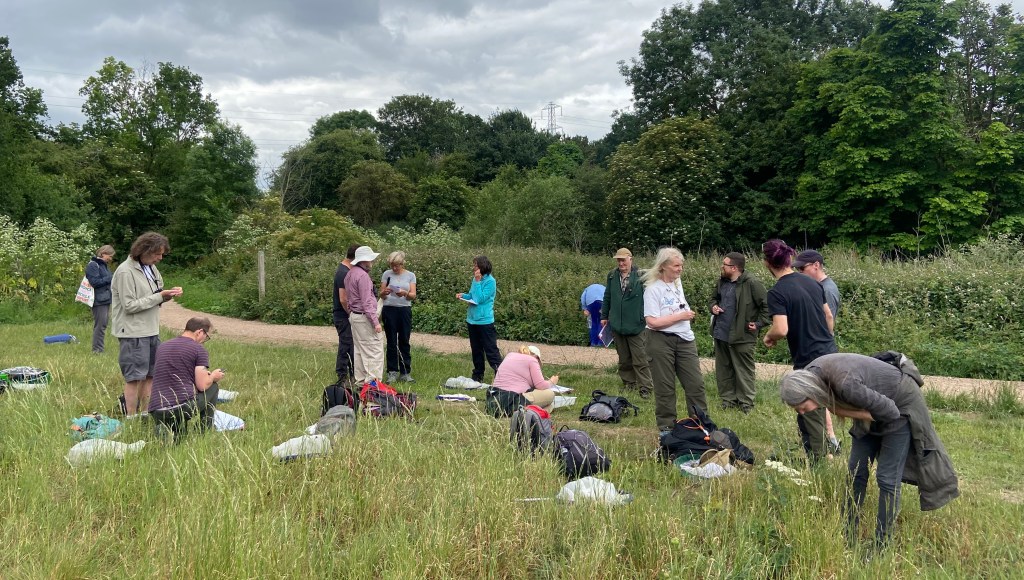
Nestled along the banks of the Hogsmill River, one of London’s few chalk streams and a tributary of the Thames, are a series of interconnected nature reserves collectively known as the Hogsmill Valley. Our mission: Survey these reserves for beetles. It was an ambitious plan, with four sites to hit over the course of the day. We would start in the south, at Six Acre Meadow, and work our way north, ending at Rose Walk. 16 naturalists rallied for the task, representing a range of experiences from beginner to dedicated enthusiast. The party was helmed by beetle specialist Wil Heeney. Equipped with sweep nets, trays, pots and cameras, we set out.
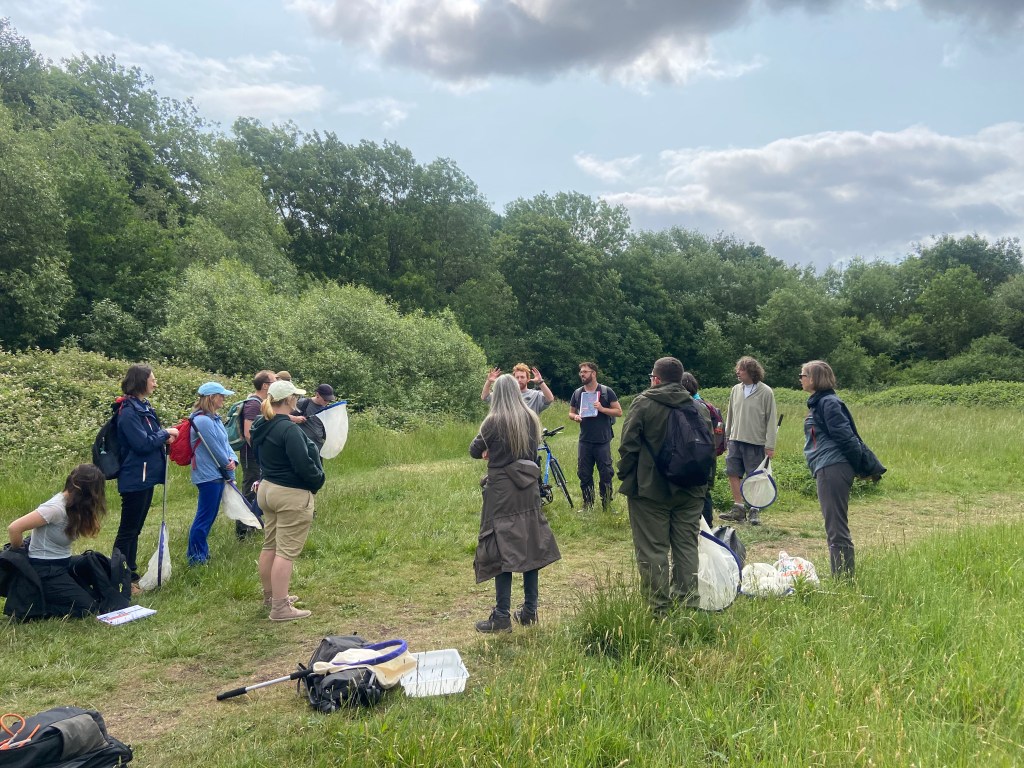
Site 1: Six Acre Meadow
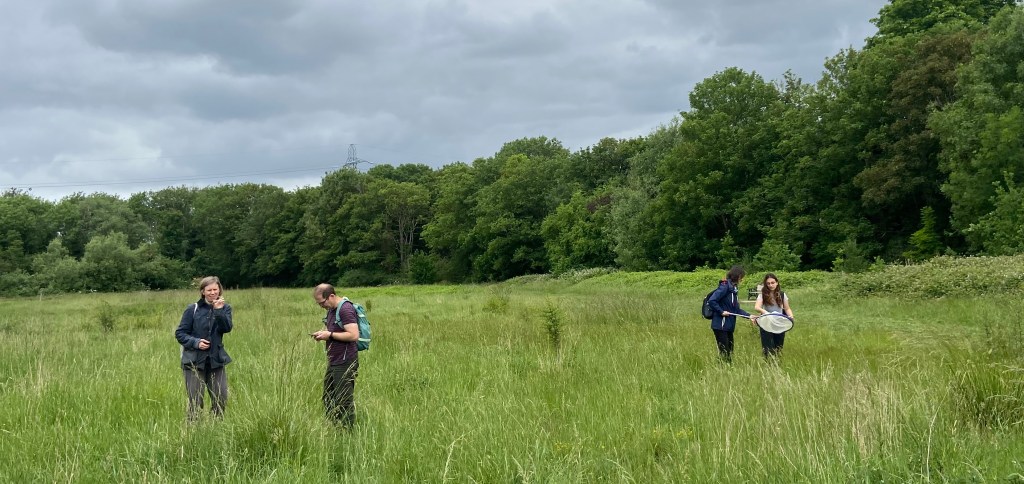
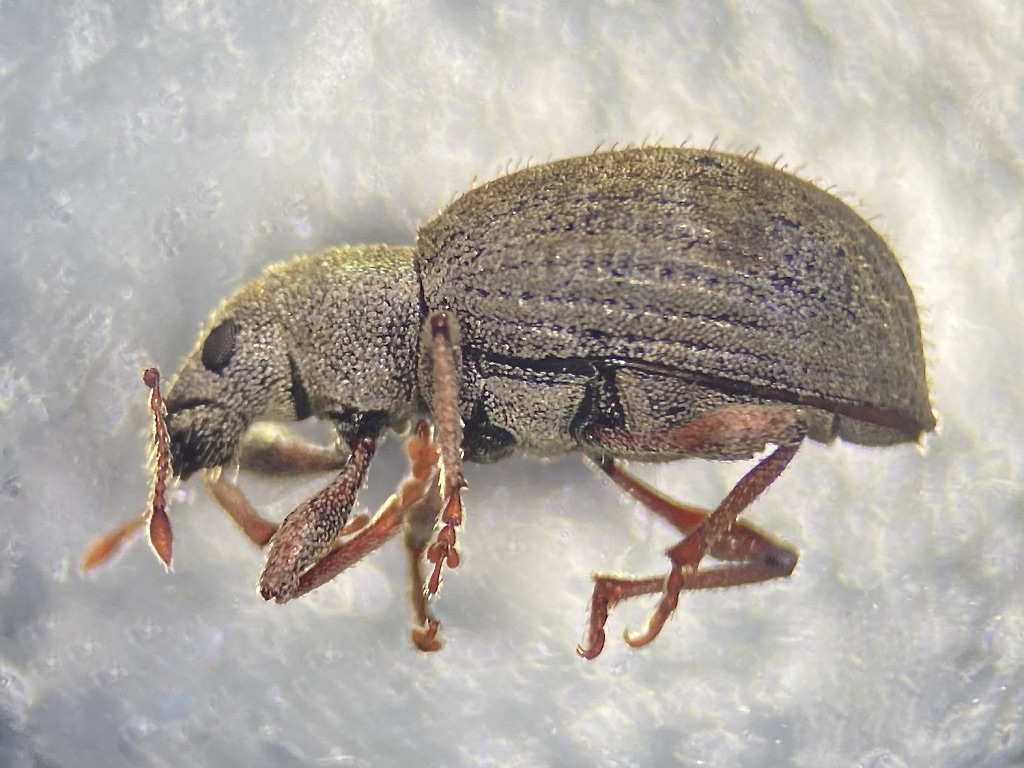
The day immediately got off to a strong start at our first site: Six Acre Meadow. The dense, lush grass of the meadow was alive with insects on our visit, including plenty of beetles. Sweep netting quickly yielded several soldier beetles (family: Cantharidae), including Cantharis fusca, C. lateralis and C. figurata, as well as the common Malachite Beetle (Malachius bipustulatus) and its slightly less well-known cousin Cordylepherus viridis. The distinctive, shining green Swollen-thighed Beetle, Oedemera nobilis, was also found. By far the most abundant beetle, however, was the grey-green Oedemera lurida, which close to every single participant managed to find within a few minutes.
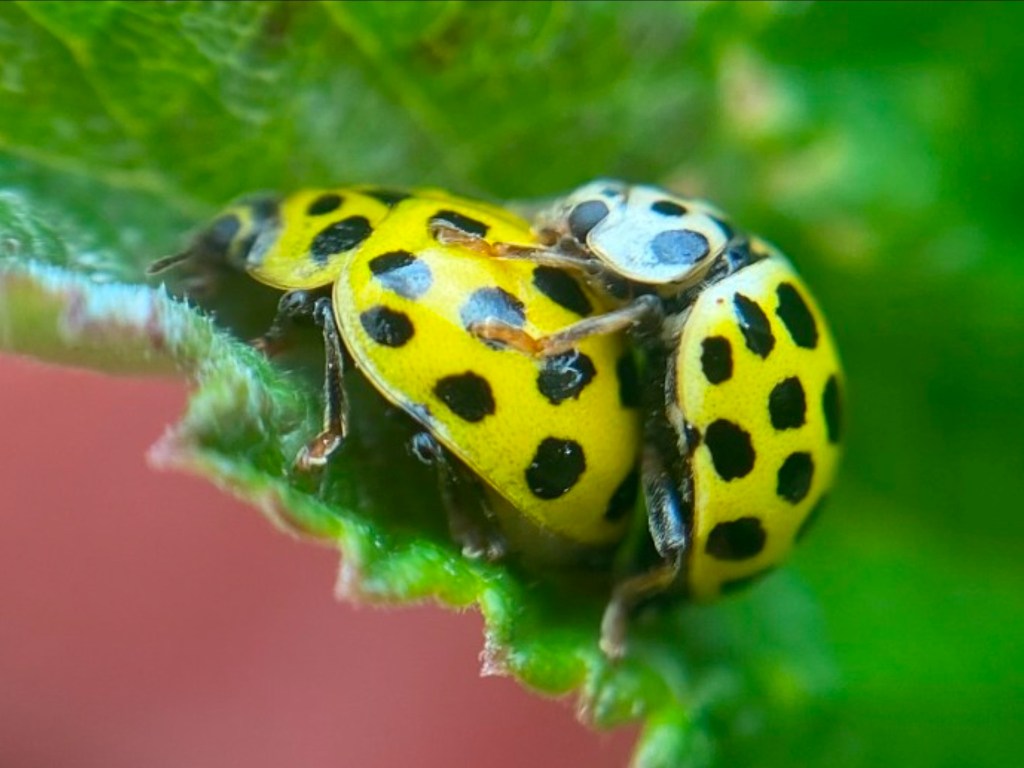
As can be expected in any meadow, ladybirds (family: Coccinellidae) were also abundant, with the 24-spot Ladybird (Subcoccinella vigintiquattuorpunctata) particularly prolific. 7-spot Ladybird (Coccinella septempunctata), 2-spot Ladybird (Adalia bipunctata) and mating 22-spot Ladybird (Psyllobora vigintiduopunctata) were also found.
The meadow also proved very good for weevils. The bulky and prickly Sciaphilus asperatus, the neat black Rhinoncus perpendicularis and the extravagantly patterned Nanophyes marmoratum were all found from sweeping the grass. Zacladus exiguus was swept from a large patch of Cut-leaved Crane’sbill (Geranium dissectum) on the meadow edge, upon which it feeds.
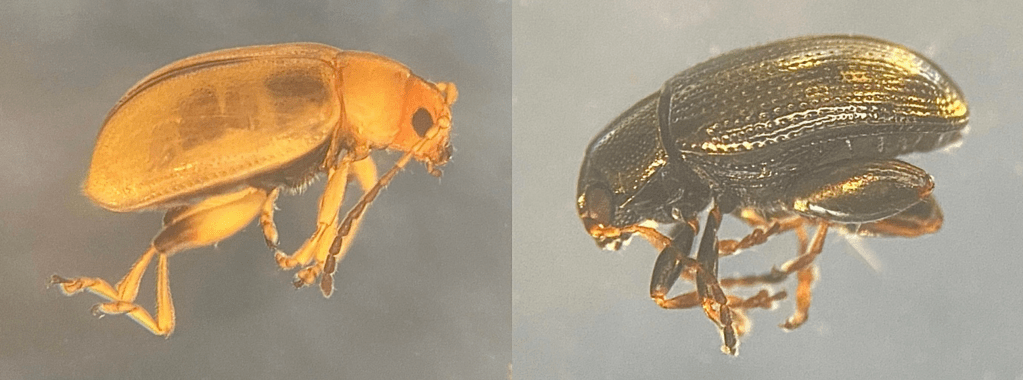
In terms of smaller beetles, two nice flea beetle species were found from sweeping: the yellow Aphthona lutescens and the pitch-black Chaetocnema concinna. Flea beetles are a tribe (Alticini) within the family Chrysomelidae (the ‘leaf beetles’) which are distinctive for their greatly enlarged hind femorae (essentially their ‘thighs’) which are adapted for jumping; hence ‘flea beetle’ (see photos below). Though very common, they are a challenging group to identify as most are very small (<5 mm) and often require dissection to identify.
Ironically, likely the best find from our visit to Six Acre Meadow in terms of rarity was not a beetle but two leafhoppers (family: Cicadellidae). What immediately caught the eyes of a few participants upon arriving in the meadow was a large patch of Meadowsweet (Filipendula ulmaria). Sweeping this yielded two leafhopper species which are found only on Meadowsweet as a host plant: the small and spotted Eupteryx signatipennis and the larger Macrosteles septemnotatus. Due to their strict requirements for large patches of their host plant, both these hoppers are rarely recorded. As per the NBN Atlas, the day’s records represent the first ever London record for E. signatipennis and the second ever for M. septemnotatus.
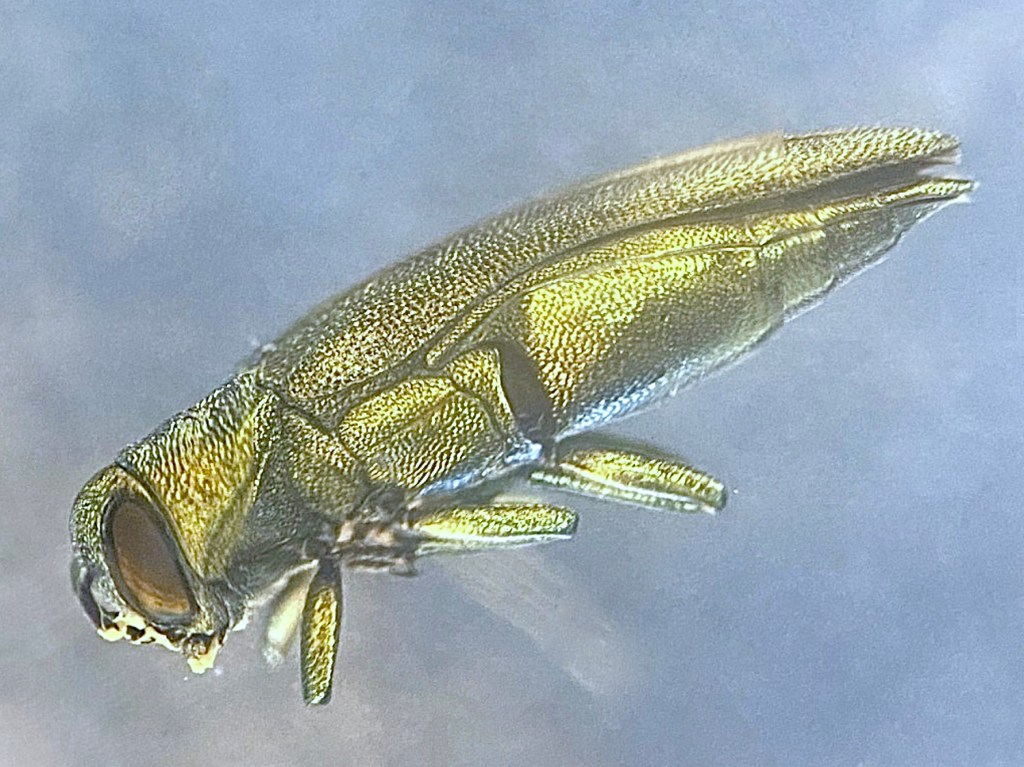
With our ambitious schedule for the day, it was soon due time to depart Six Acre Meadow and head onwards. In the ever-distracted fashion of naturalists, however, a shout from one participant standing in a bramble bush quickly brought everyone over. She had noticed several jewel beetles (family: Buprestidae) flying between the bramble flowers. Most infamous for being wood-boring pests of timber plantations, jewel beetles are also – as the name suggests – stunningly beautiful beetles that, with their metallic and iridescent colouring, resemble jewels. The jewel beetle found on the brambles was a gorgeous metallic green one: Agrilus angustulus.
Site 2: Southwood Open Space
Despite being little more than 300 metres north of Six Acre Meadow, our second site – Southwood Open Space – was distinctly different in character. Where Six Acre Meadow had been lush and green, Southwood Open Space, like many parks around London this summer, was very dry. The vegetation character of the meadow was also notably different. Where tufts of Meadowsweet (Filipendula ulmaria) and Meadow Crane’s-bill (Geranium pratense) had dotted Six Acre Meadow, Southwood Open Space’s most notable plant was the surprisingly abundant Wild Onion Allium vineale.
The beetles found, however, were more or less the same. Among the larger beetles, novelties from the grassland itself were limited to the fourth soldier beetle species of the day in Cantharis decipiens, the 14-spot Ladybird Propylea quattuordecimpunctata and the green weevil Phyllobius roboretanus.
Perhaps the most interesting beetle find at this site was the co-occurrence of three species of very similar Protapion weevils swept from a large patch of White Clover (Trifolium repens). The Protapion weevils are a tricky bunch, with 10 British species all found on clovers and all black with orange legs. To distinguish them is usually a microscopy job, looking at details of the different segments of the legs as well as the shape of the rostrum (the weevil’s ‘nose’).
Likely the ‘rarest’ find at this site was Phalacrus corruscus, a tiny (2mm long) shiny black beetle and a member of the family Phalacridae (the ‘Shining Flower Beetles’), a family of beetles which are often found in sweep net samples. Many refrain from collecting these species given the high-power microscopy needed to identify them through examining details of the legs and elytra, however when one does succeed in doing so you are often met with a relatively ‘rare’ find (in the sense of an infrequently recorded species). The day’s record was the fifth ever for London.
Besides the meadow itself, a brief shake-down of an English Oak (Quercus robur) and Hybrid Crack Willow (Salix × fragilis) on the edge of the field yielded a few nice species including the leafhopper Alebra albostriella and the plant bug Phylus melanocephalus from the former, as well as the ever-present Willow Flea Beetle Crepidodera aurata from the latter.
Site 3: Elmbridge Meadows
Hugging the Hogsmill River for just shy of a kilometre, Elmbridge Meadows – our next site – acts as a crucial ‘green corridor’ in the borough. What it lacks in width it makes up for in interesting habitat. The Hogsmill is lined here with gorgeous old willows (Salix spp.) and poplars (Populus spp.), and a diverse sward of shrubs line the footpath as it snakes north. It was here that many of the days’ most exciting finds were made.
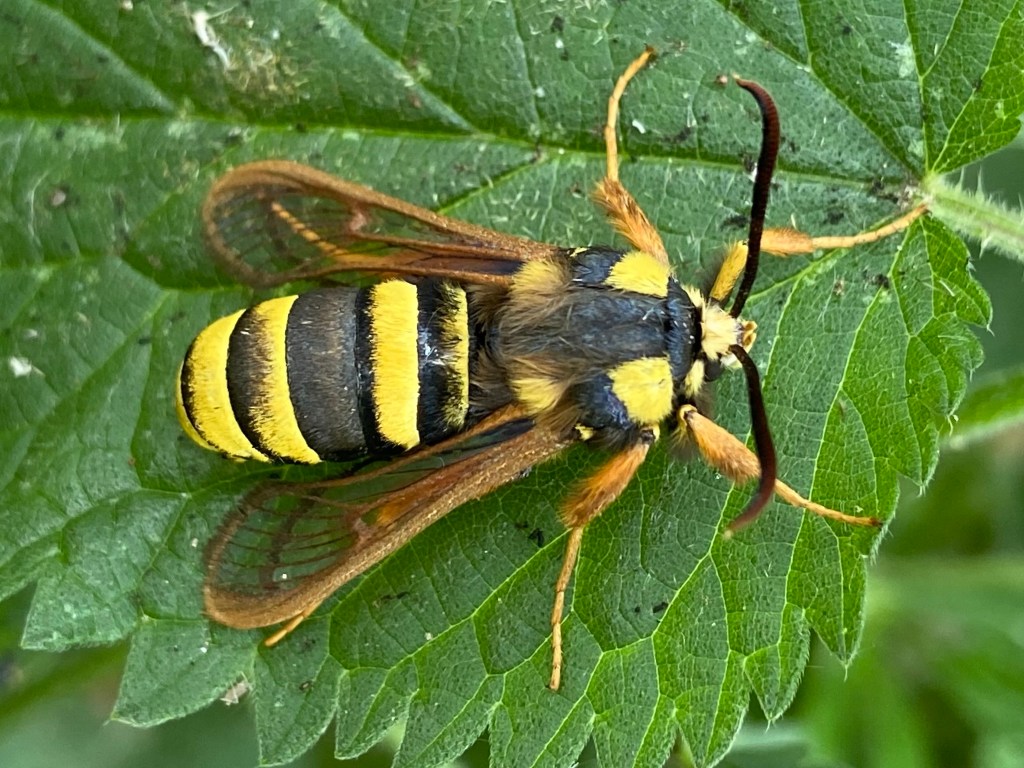
The first of these excitements was a moth! And if your natural reaction to that is to question why a moth deserves mention in a blog about beetles (fair enough), that is because this was not just any old moth, but rather a Hornet Moth (Sesia apiformis). Without much question at all this is one of the most charismatic and attractive of all the British Lepidoptera, and quite rare too. The Hornet Moth is a clearwing moth, part of the family Sesiidae which features 16 UK species which are at most uncommon and several of which are stupidly scarce. Without concerted search effort using pheromone lures, the average naturalist in the UK can expect to see only a handful of these gorgeous moths in a lifetime.
As you might guess from the name, Hornet Moths are Batesian mimics of Hornets (Vespa crabro). In flight or from a distance you could quite easily be fooled, especially because they are a similar size. Adult Hornet Moths are generally only ever found on or near poplars (Populus spp.) – the larvae feed on the wood pulp at the base – and almost exclusively in June. That is to says the conditions we saw ours were exactly right. Check out this beauty!
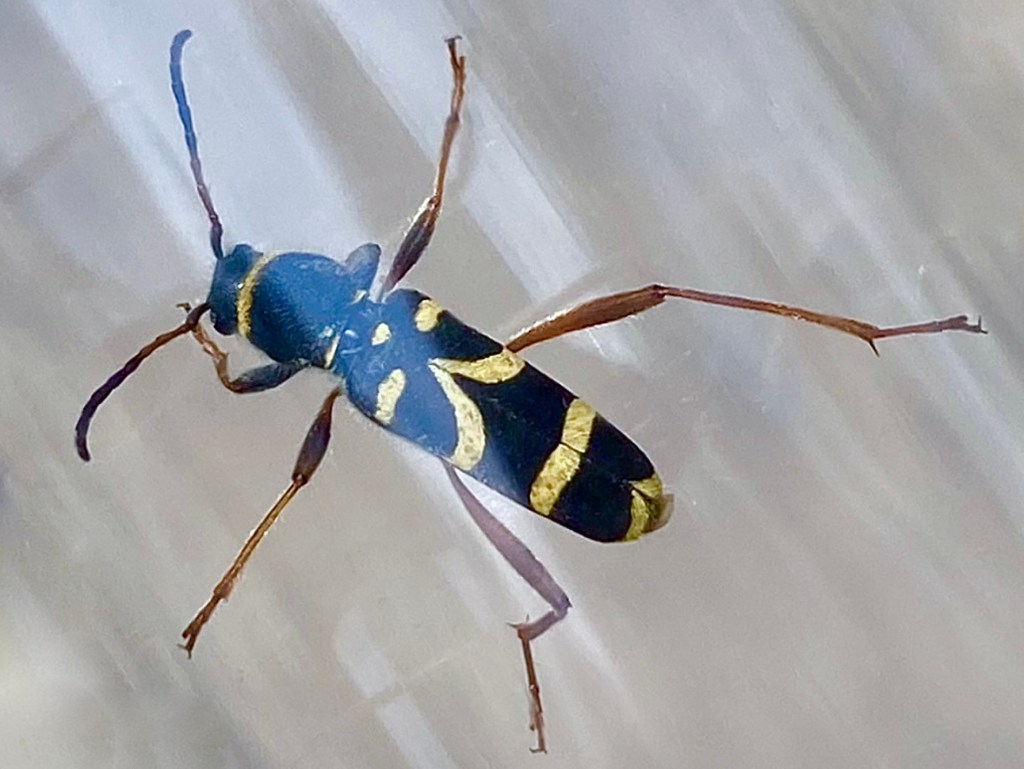
Back to beetles now, and the theme of mimicking black-and-yellow buzzing things nevertheless continued. Sweeping of Hogweed (Heracleum sphondylium) umbellifers alongside the riverbanks yielded another gorgeous insect: the Wasp Beetle (Clytus arietus). This is another species which is not often seen given it is reliant on good quality deadwood habitat. In this case it mimics wasps in the genus Vespula (i.e. the Common and German Wasp).
Other beetle highlights from Elmbridge Meadows included:
- Two common leaf beetles (family: Chrysomelidae): Gastrophysa viridula found on dock (Rumex sp.) and Plagiodera versicolora found beneath willow (Salix sp.).
- The first ground beetle (family: Carabidae) of the day: the common Harpalus affinis, found running across the footpath
- The fifth soldier beetle (family: Cantharidae) of the day, Cantharis pellucida, found on a bramble thicket
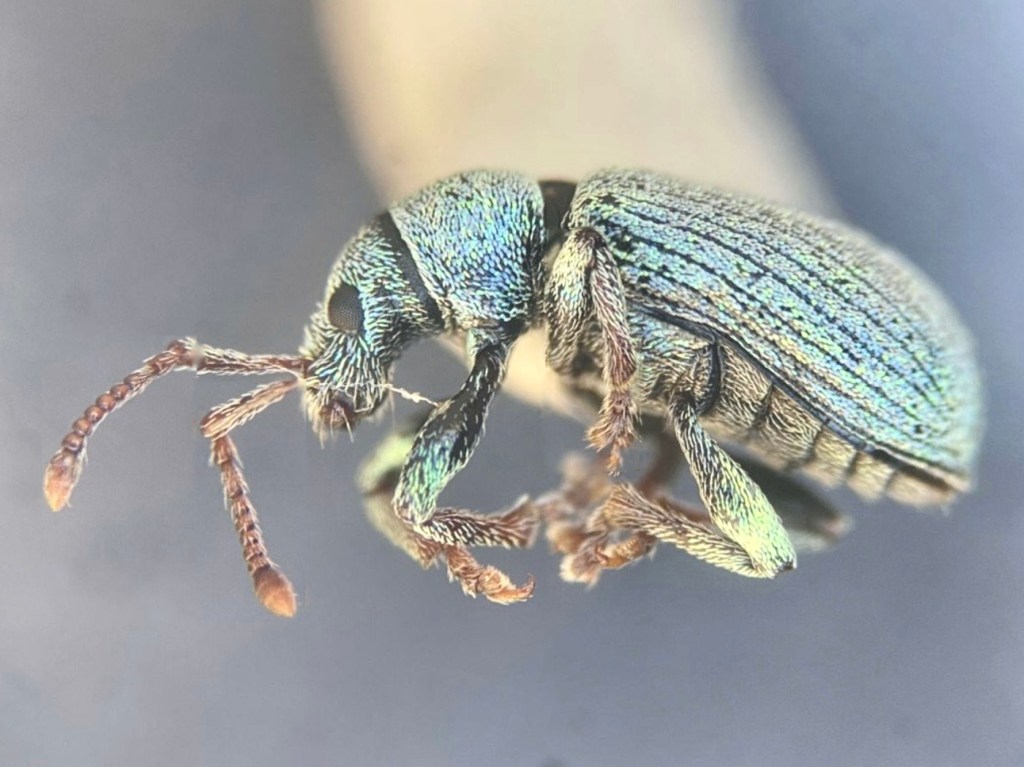
- The metallic blue flea beetle Altica lythri, swept from vegetation along the riverbank and dissected under the microscope for identification
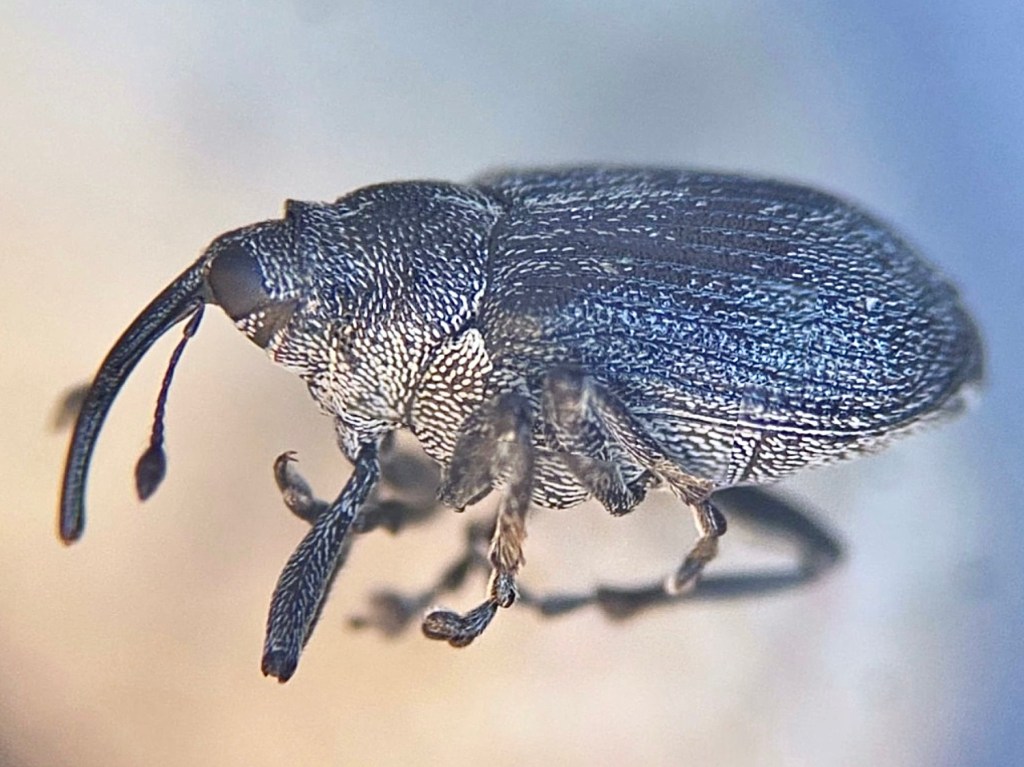
- The long-nosed weevil Ceutorhynchus obstrictus
- A nice selection of host-specific apionid weevils swept from Common Mallow (Malva sylvestris): Aspidapion aeneum, Aspidapion radiolus, Malvapion malvae and Pseudapion rufirostre
The only other thing of note in Elmbridge Meadows on our visit was the remarkably large numbers of Harlequin Ladybirds (Harmonia axyridis). Close to every single leaf of the bramble thicket which lined each side of the footpath had either a larva, adult or cluster of eggs on it. It seems to have been a very productive year for the species.
After a quick lunch where we delighted in watching damselflies dance over the river, we headed out of Elmbridge Meadows and towards the last site for the day: Rose Walk.
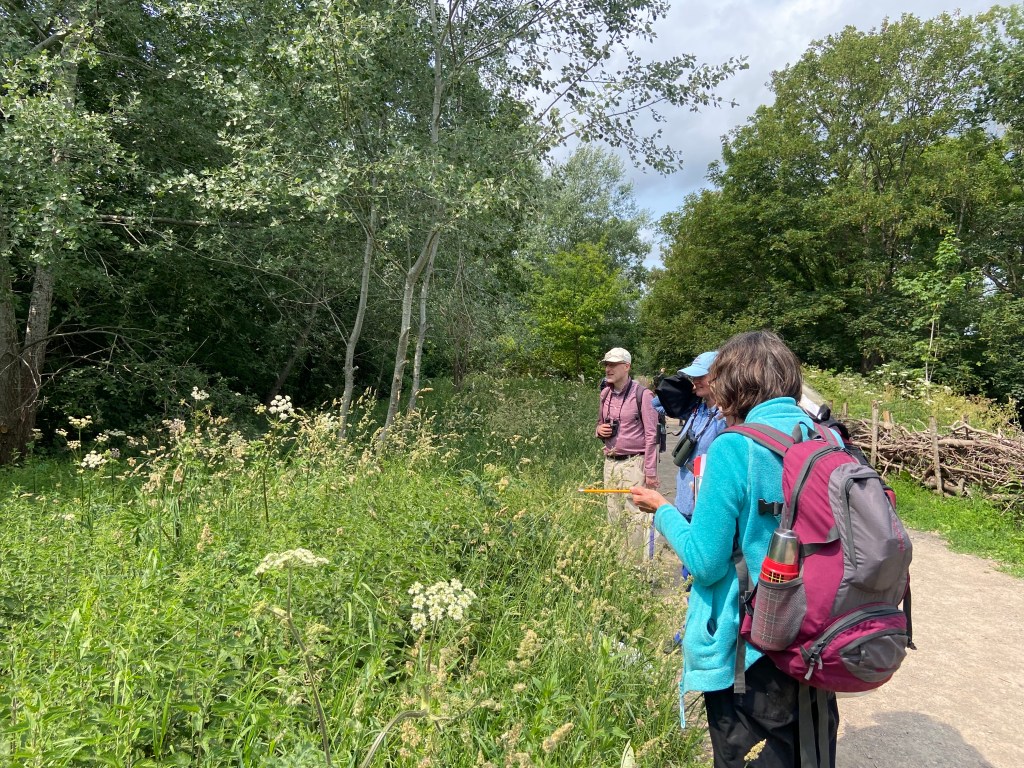
Site 4: Rose Walk
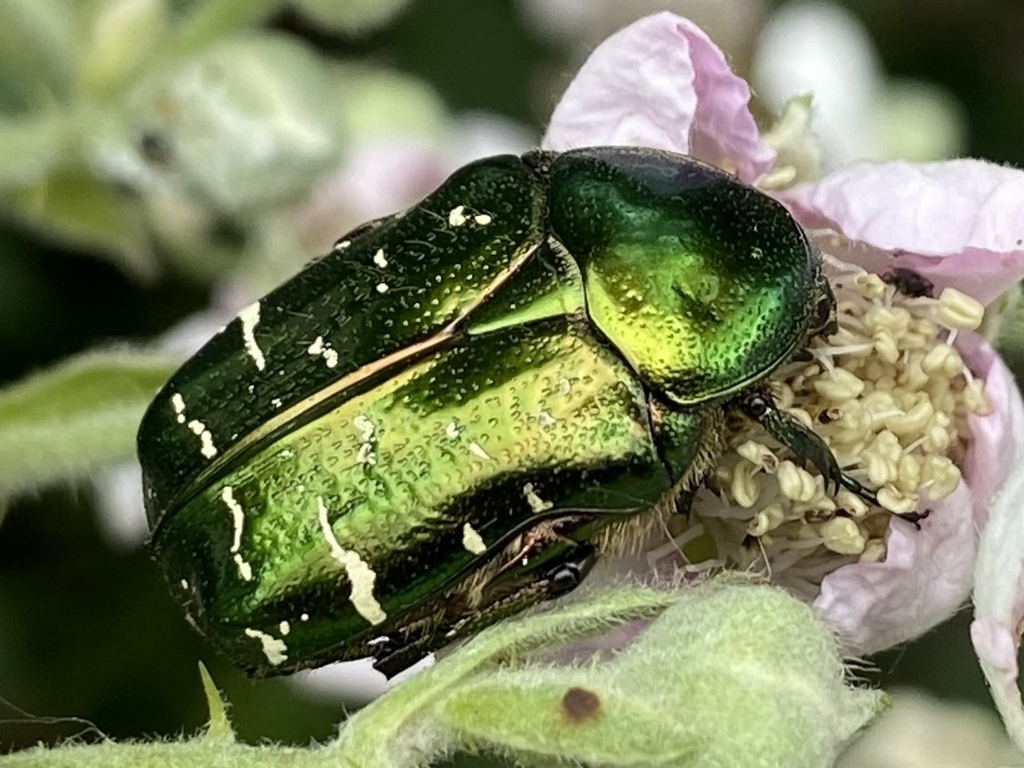
By this point – having been out and about for nearing 5 hours – fatigue was beginning to set in, and so recording levels dropped a little such that only the most interesting specimens garnered attention. Fortunately, a few last-minute beetle delights were nevertheless offered up by Rose Walk. Fittingly, the first of these was a Rose Chafer (Cetonia aurata), with its gorgeous iridescent green elytra shining in the afternoon sun. The chafer beetles, of which Cetonia aurata is the most common and well-known, represent several subfamilies within the family Scarabaeidae. They are a nice group of beetles to get to know as a beginner as all the species are large and relatively easy to tell apart once learnt. For those interested, Wil Heeney – who led the Field Recorder Day – is running a training webinar about these beetles, including the Rose Chafer, on the 15th of September. Sign up here!
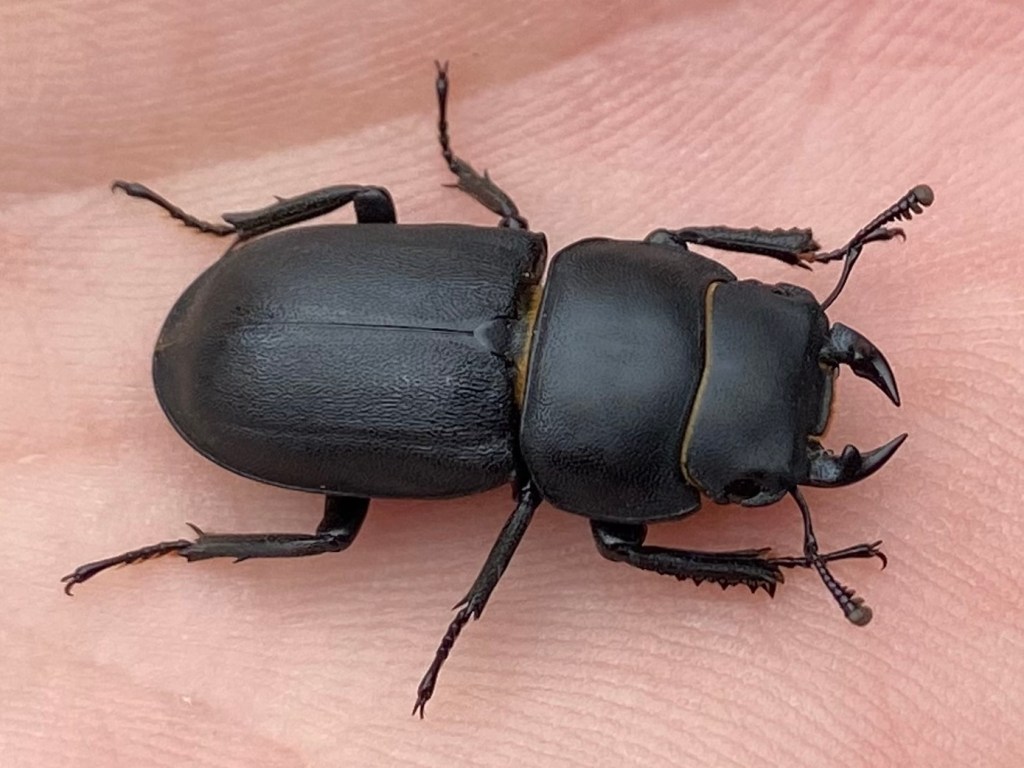
Given how dry this summer has been in southern England, deadwood has fallen off most naturalists’ radars. Nevertheless, a particularly promising log was noticed right towards the end of the day and, as if to see us off, yielded one of the largest and most loved of the British beetles: the Lesser Stag Beetle (Dorcus parallelipipedus).
All in all, the Field Recorder Day was a resounding success, with 16 participants generating 137 records of 89 species in total, including 64 records of 42 beetle species. Records were spread across the four sites as follows:
- Six Acre Meadow: 43 records of 41 species (including 22 records of 22 beetle species)
- Southwood Open Space: 39 records of 30 species (including 22 records of 16 beetle species)
- Elmbridge Meadows: 42 records of 34 species (including 16 records of 13 beetle species)
- Rose Walk: 11 records of 9 species (including 6 records of 4 beetle species)
Thanks very much to everyone who attended and recorded beetles and other interesting species. It was a very fun day and we hope to see people again at similar future events, which you can sign up for here.
 Biological Recording