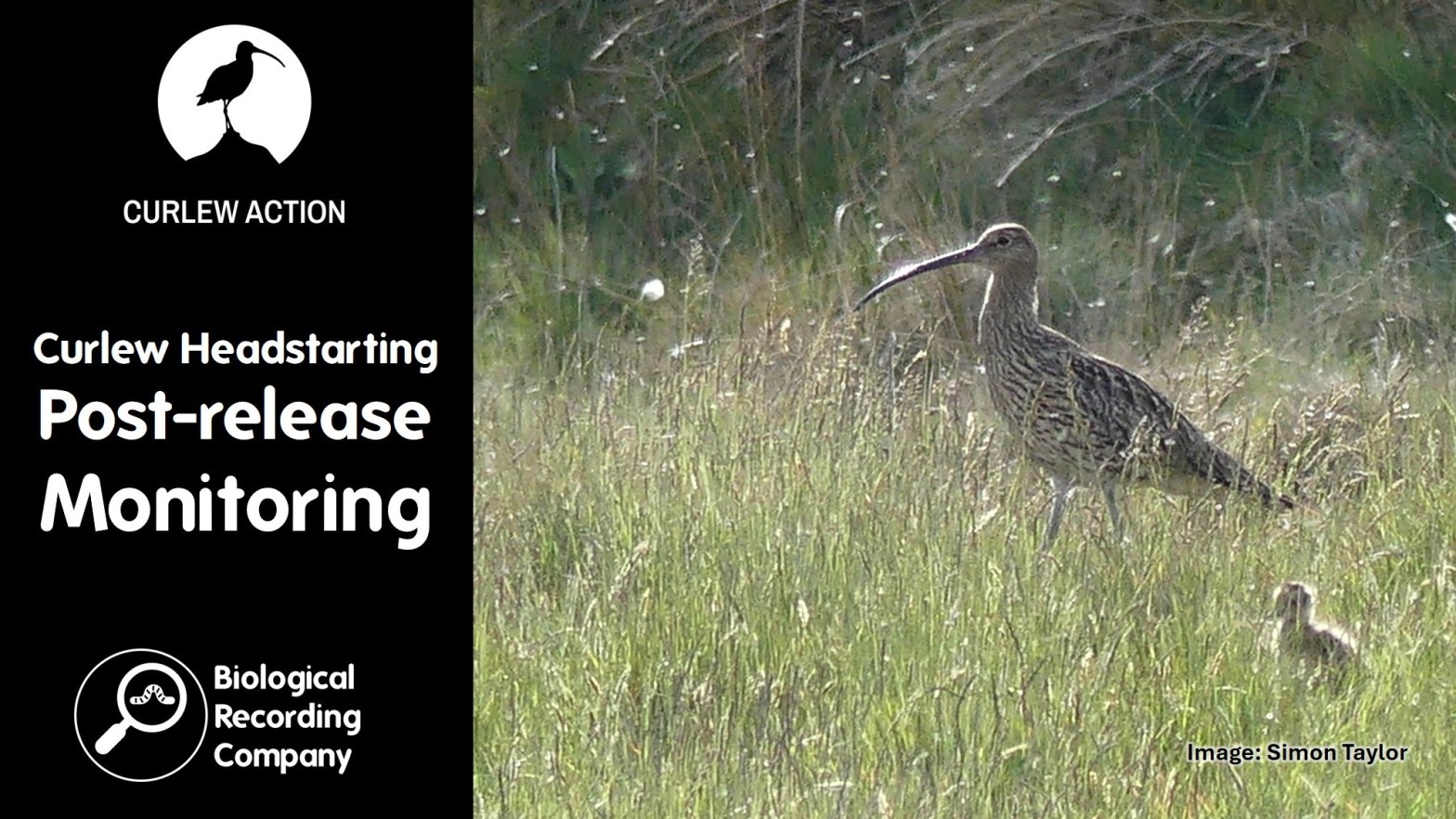
This session from the European Curlew Headstarting Workshop was led by Katharine Bowgen from the British Trust for Ornithology (BTO) and focused on post-release monitoring, exploring survival rates and effective methods for tracking released birds. Experiences were shared about where birds have been observed during the winter months and data were examined on their overwintering survival rates. Additionally, participants were invited to share insights and observations comparing the breeding success rate of headstarted birds versus wild populations.
Discussion with Katharine Bowgen
Dr Katharine Bowgen is a Senior Research Ecologist with the BTO, split between BTO Cymru and the Wetland and Marine Teams. She principally works with wader populations in the UK, observing their behaviours and habitat choices through the year and with her background in behavioural ecology she’s able to understand more about their behaviours and habitat preferences. A keen bird ringer she also works with several wader ringing groups to learn more about bird populations from a hands on perspective as well!
Coming soon…
European Curlew Headstarting Online Workshop
This blog was produced as an output of the European Curlew Headstarting Online Workshop, a virtual event delivered by Curlew Action and the Biological Recording Company. Check out the other presentations and outputs in the other blogs resulting from this event.
- An Overview of Headstarting Curlews
- Curlew Headstarting Projects: Europe
- Curlew Headstarting Projects: England
- Curlew Headstarting: Eggs, Incubation and Hatching
- Curlew Headstarting: Rearing Chicks
- Curlew Headstarting: Health & Disease
- Curlew Headstarting: Releasing Birds
- Curlew Headstarting: Post-release Monitoring
For more information about this event, the speakers and the presentations see the event delegate pack below.
 Biological Recording